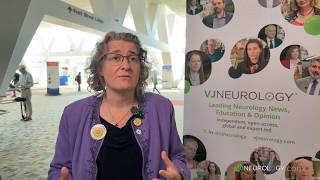
ISC 2026 | Next steps for Factor XIa inhibitors in secondary stroke prevention
Mike Sharma, MD, MSc, FRCPC, McMaster University, Hamilton, Canada, outlines the next steps in research on Factor XIa inhibitors for secondary stroke prevention. He highlights ongoing evaluation of milvexian in the LIBREXIA-STROK trial (NCT05702034) and the potential to bring asundexian to patients following positive results from the OCEANIC-STROKE trial (NCT05686070). This interview took place at the 2026 International Stroke Congress (ISC), held in New Orleans, LA.
These works are owned by Magdalen Medical Publishing (MMP) and are protected by copyright laws and treaties around the world. All rights are reserved.
Transcript
There are a number of trials ongoing, and the first thing to understand is that asundexian is a small molecule direct inhibitor. There’s another trial with milvexian, which is also a small molecule direct inhibitor. That trial is called LIBREXIA-STROK, and we look forward to those results. There are trials as well in atrial fibrillation with small molecular inhibitors, as well as antibodies directed against Factor XI...
There are a number of trials ongoing, and the first thing to understand is that asundexian is a small molecule direct inhibitor. There’s another trial with milvexian, which is also a small molecule direct inhibitor. That trial is called LIBREXIA-STROK, and we look forward to those results. There are trials as well in atrial fibrillation with small molecular inhibitors, as well as antibodies directed against Factor XI. And then finally, there are these novel classes of agents, small interfering RNAs, antisense oligonucleotides, and they’re being tested in other areas, such as cancer-associated thrombosis. And we look forward to the results from all of this work to see how we can best use this class of agents. I think the paradigm shifted. What we have to do now is get this medication into the hands of prescribers, physicians, and patients as well. You know, for the first time, we have something that works better than aspirin alone or clopidogrel alone, whatever agent you choose to use over the long term. Previously, we’ve been limited to either of those agents and a short-term use of dual antiplatelet therapy. Here we have something that is easy to start without a bleeding hazard and continues to work over the long term. I think this will fundamentally change how we approach secondary stroke prevention.
This transcript is AI-generated. While we strive for accuracy, please verify this copy with the video.
Read more...