The Sleep Disorders Channel is supported through educational grants from Alkermes and Takeda.
VJNeurology is an independent medical education platform. Channel supporters have no influence over the production of content.
SLEEP 2026 | Why permanent standard time may be better for sleep and health
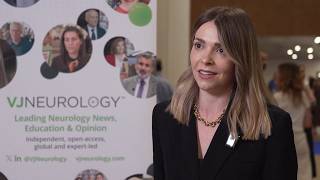
Karin Johnson, MD, Baystate Medical Center, Springfield, MA, discusses the impact of the transition from standard time to daylight saving time on sleep and health. She reviews evidence linking daylight saving time to increased headaches, cardiovascular events, motor vehicle crashes, and long-term circadian disruption, and explains why permanent standard time may better support sleep and overall health. This interview took place at the 40th annual meeting of the Associated Professional Sleep Societies (APSS) in Baltimore, MD.
These works are owned by Magdalen Medical Publishing (MMP) and are protected by copyright laws and treaties around the world. All rights are reserved.
Transcript
Yeah, so there’s a lot of questions. A lot of people don’t like daylight saving time, and a lot of people think of daylight saving time as only the switches in the spring and fall, and that’s not actually what it is. It’s the time period where we shift the clocks later between the spring until the fall, and there’s actually long-term consequences in that whole time so a lot of the studies that we have really look at what can happen in the week after the spring and fall so we do see a lot of bad consequences we recently had a paper looking at headache frequency going up in that in that period but lots of past studies on strokes depression heart attacks car crashes outcomes of students doing you know school work we see those outcomes but a lot of the more long-term data that shows there is this sort of circadian disruption and potential loss of sleep especially when we mix later sunrises and sunsets with our current usual early start times of work and school times here in the U...
Yeah, so there’s a lot of questions. A lot of people don’t like daylight saving time, and a lot of people think of daylight saving time as only the switches in the spring and fall, and that’s not actually what it is. It’s the time period where we shift the clocks later between the spring until the fall, and there’s actually long-term consequences in that whole time so a lot of the studies that we have really look at what can happen in the week after the spring and fall so we do see a lot of bad consequences we recently had a paper looking at headache frequency going up in that in that period but lots of past studies on strokes depression heart attacks car crashes outcomes of students doing you know school work we see those outcomes but a lot of the more long-term data that shows there is this sort of circadian disruption and potential loss of sleep especially when we mix later sunrises and sunsets with our current usual early start times of work and school times here in the U.S., that that really can increase risks of obesity, of cancer. We have some new evidence, a study recently about stroke risk. We have data on car crashes going up. so a lot of people think if it’s light later you know it’ll be safer for driving we actually see the opposite we see about a 20% increased risk of fatal car crashes in places where the Sun is setting an hour later and more misaligned with the Sun being overhead at noon so that has really framed the argument of which time should we keep. So if we want to end the current switches, it’s really important that we don’t end it with permanent daylight saving time, which can increase these overall risks, but go with the more sun aligned, naturally aligned sleep promoting time of permanent standard time.
This transcript is AI-generated. While we strive for accuracy, please verify this copy with the video.
Read more...