The Sleep Disorders Channel is supported through educational grants from Alkermes and Takeda.
VJNeurology is an independent medical education platform. Channel supporters have no influence over the production of content.
SLEEP 2026 | Recommendations for the expanded use of adaptive servo-ventilation in central sleep apnea
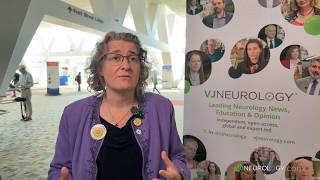
Karin Johnson, MD, Baystate Medical Center, Springfield, MA, discusses evolving recommendations for the use of adaptive servo-ventilation (ASV) in central sleep apnea. She reviews emerging evidence supporting broader use of ASV across patient populations, highlights the importance of careful follow-up, and explains how individualized assessment can help optimize treatment outcomes. This interview took place at the 40th annual meeting of the Associated Professional Sleep Societies (APSS) in Baltimore, MD.
These works are owned by Magdalen Medical Publishing (MMP) and are protected by copyright laws and treaties around the world. All rights are reserved.
Transcript
Yeah, so adaptoserventilation can be a great tool to help with especially the sort of unstable endotype of central sleep apnea, whether it’s sort of pure central sleep apnea or treatment-emergent central sleep apnea. And this goes back to a prior study that connected ASV with a higher risk of mortality and patients with low ejection fraction heart failure who were put on ASV. There’s been some more recent studies that haven’t found that connection and even the original study the only connection was actually in the subset of people that had the lowest EF primarily central sleep apnea baseline that that mortality risk was seen...
Yeah, so adaptoserventilation can be a great tool to help with especially the sort of unstable endotype of central sleep apnea, whether it’s sort of pure central sleep apnea or treatment-emergent central sleep apnea. And this goes back to a prior study that connected ASV with a higher risk of mortality and patients with low ejection fraction heart failure who were put on ASV. There’s been some more recent studies that haven’t found that connection and even the original study the only connection was actually in the subset of people that had the lowest EF primarily central sleep apnea baseline that that mortality risk was seen. And so some of the new recommendations are you know saying it looks like especially the newer algorithms of the newer ASV machines as well as this newer data comes out you know looks like it’s much safer to consider ASV regardless of so the ejection fraction and and I think especially if you have patients who are more the treatment emergent type we really never had data that that population was unsafe and so my current practice is know, you want to make sure when we’re putting people on any PAP machine that it’s actually helping them. So are they feeling better? Are they, you know, is their AHI coming down? Maybe we check, you know, oxygen levels. Are they coming up? If all those things are aligned, I think it’s very unlikely that you’re causing harm to that person. But if you put a person on an ASV machine and they’re coming back to you and saying, my sleep is worse, I’m feeling worse, you know, you should be, you know, thinking of that, of, you know, what’s going on here. Are you having pressure fluctuations that could be affecting them? So I think we can consider it in almost any patient now, but I think that follow-up is really important to make sure, not only they’re on the right machine but the right setting, they’re using it well you know ASV, is very sensitive to leaks it is the reason its not doing well because you don’t have the right mask or something like that so I think it’s a tool we can expand use, and just follow closely and look for those positive benefits.
This transcript is AI-generated. While we strive for accuracy, please verify this copy with the video.
Read more...