The Sleep Disorders Channel is supported through educational grants from Alkermes and Takeda.
VJNeurology is an independent medical education platform. Channel supporters have no influence over the production of content.
SLEEP 2026 | How AI and data science are advancing obstructive sleep apnea management
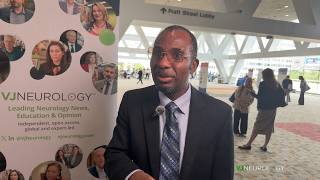
Omonigho Michael Bubu, MD, MPH, PhD, NYU Grossman School of Medicine, New York City, NY, discusses how artificial intelligence (AI), data science, and informatics are advancing the understanding of obstructive sleep apnea (OSA). He highlights the use of novel physiological metrics, automated sleep study analysis, and prediction models to improve risk stratification and support more personalized treatment strategies. This interview took place at the 40th annual meeting of the Associated Professional Sleep Societies (APSS) in Baltimore, MD.
These works are owned by Magdalen Medical Publishing (MMP) and are protected by copyright laws and treaties around the world. All rights are reserved.
Transcript
Yeah, absolutely. I mean, that’s what’s happening right now, you know, in terms of using different algorithms to be able to score sleep studies and also help with defining novel metrics for obstructive sleep apnea. So like hypoxic burden or ventilatory burden or arousal thresholds, loop gain and all of that stuff. So I think, just as we see in other fields, AI or data science, big data will help and I think they’re already helping, so to basically help with respect to maybe things like prediction models being able to identify people that would be at heightened risk based on certain characteristics or even physiologic mechanistic processes, right, and they can also help with respect to determining what kind of treatment would maybe be more impactful or necessary...
Yeah, absolutely. I mean, that’s what’s happening right now, you know, in terms of using different algorithms to be able to score sleep studies and also help with defining novel metrics for obstructive sleep apnea. So like hypoxic burden or ventilatory burden or arousal thresholds, loop gain and all of that stuff. So I think, just as we see in other fields, AI or data science, big data will help and I think they’re already helping, so to basically help with respect to maybe things like prediction models being able to identify people that would be at heightened risk based on certain characteristics or even physiologic mechanistic processes, right, and they can also help with respect to determining what kind of treatment would maybe be more impactful or necessary. So we know that physiologic burden metrics can also help influence treatment decisions or whether you’re going to be able to really help the patient, to treat the obstructive sleep apnea. So I think they will be very helpful. They’re already helping with different algorithms that help with scoring of these sleep studies that help with reduction in time and effort that we use to look at these sleep studies. So but that’s my thought process, I think that they’re very – they will be very impactful. I have collaborators who are doing a lot in this space, and I think they’re very needed to help with the whole treatment of OSA, understanding the risk with AD, or the pathology, as well as helping us delineate treatment-specific mechanisms.
This transcript is AI-generated. While we strive for accuracy, please verify this copy with the video.
Read more...