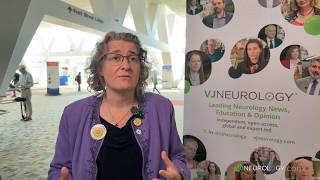
AAN 2026 | How will factor XIa inhibitors impact the future of secondary stroke prevention?
Mike Sharma, MD, MSc, FRCPC, McMaster University, Hamilton, Canada, discusses how factor XIa inhibitors will influence the future of secondary stroke prevention, following the positive findings from OCEANIC-STROKE (NCT05686070). Prof. Sharma notes that asundexian can be used with either monotherapy or dual antiplatelet therapy, and its benefits are seen regardless of the initial choice of therapy. This interview took place at the 78th American Academy of Neurology (AAN) Annual Meeting in Chicago, IL.
These works are owned by Magdalen Medical Publishing (MMP) and are protected by copyright laws and treaties around the world. All rights are reserved.
Transcript
So, you know, given the results of the trial, which were really quite spectacular, we expect a significant change in how antithrombotics are used for secondary stroke prevention. The initial trials that established aspirin as an effective agent were done in the 70s. So for 50 years, we’ve had long-term antiplatelet monotherapy. Now, for the first time, we really have an additional agent with robust evidence, which shows a reduced risk of recurrent ischemic stroke without the hazard of bleeding...
So, you know, given the results of the trial, which were really quite spectacular, we expect a significant change in how antithrombotics are used for secondary stroke prevention. The initial trials that established aspirin as an effective agent were done in the 70s. So for 50 years, we’ve had long-term antiplatelet monotherapy. Now, for the first time, we really have an additional agent with robust evidence, which shows a reduced risk of recurrent ischemic stroke without the hazard of bleeding. So this uncoupling of the benefit from the hazard is really a significant advance. You know, in OCEANIC, what we saw was it worked with monotherapy, single antiplatelets or dual antiplatelets, no matter what the initial choice of therapy was. So it can work alongside these antithrombotic agents. And by the way, we didn’t specify which antiplatelets were to be used. Most of the usage of single therapy was aspirin, though there was a significant amount of clopidogrel in there. And most of the dual use was aspirin plus clopidogrel, but there were other choices, including ticagrelor. So we think that on this baseline of antiplatelet therapy, the addition of asundexian added on top of it, significant benefit without a bleeding hazard. And that should be of interest to just about everybody in this area.
This transcript is AI-generated. While we strive for accuracy, please verify this copy with the video.
Read more...

Disclosures
Dr. Sharma has received personal compensation in the range of $10,000-$49,999 for serving as a Consultant for Bayer. Dr. Sharma has received personal compensation in the range of $5,000-$9,999 for serving as a Consultant for Regeneron. Dr. Sharma has received personal compensation in the range of $500-$4,999 for serving as a Consultant for Anthos. Dr. Sharma has received personal compensation in the range of $500-$4,999 for serving on a Speakers Bureau for Bayer. The institution of Dr. Sharma has received research support from Bayer.