WSC 2026 | Which blood-based biomarkers are closest to clinical implementation in stroke care?
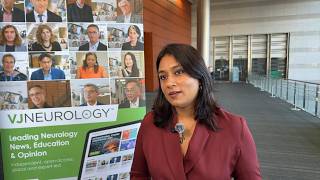
Gerrit M. Grosse, MD, PhD, University Hospital Basel, Basel, Switzerland, comments on the potential of blood-based biomarkers in stroke care, highlighting MR-proANP as a marker of atrial dysfunction associated with cardioembolic stroke. Dr Grosse speaks about the MOSES trial (NCT03961334), which is ongoing to assess this biomarker. This interview took place at the 18th World Stroke Congress (WSC) in Seoul, Korea.
These works are owned by Magdalen Medical Publishing (MMP) and are protected by copyright laws and treaties around the world. All rights are reserved.
Transcript
Well, there are some biomarkers that have been investigated very thoroughly already. MR-proANP is one example. It’s a marker of atrial dysfunction, which is very specific for atrial disease. And this is associated with cardio-embolic stroke. So there’s actually currently a randomized trial ongoing, the MOSES trial, which investigates the cutoffs of MR-proANP in stroke patients and then randomizes anticoagulation versus no anticoagulation in these patients...
Well, there are some biomarkers that have been investigated very thoroughly already. MR-proANP is one example. It’s a marker of atrial dysfunction, which is very specific for atrial disease. And this is associated with cardio-embolic stroke. So there’s actually currently a randomized trial ongoing, the MOSES trial, which investigates the cutoffs of MR-proANP in stroke patients and then randomizes anticoagulation versus no anticoagulation in these patients. So in my view, this is one of the examples that is very far ahead and could be implemented in daily clinical practice in the next years perhaps if the trial proves positive, but there are hints that that might be the case, but still we need different trials on other biomarkers that are useful and emerging, but still there’s work to do, of course, because at the moment there’s no biomarker that has been implemented in daily clinical care until now, so we are a little bit behind cardiology, but still we are moving fast and I think there will be very useful applications for the patient to be implemented in the daily clinical routine.
This transcript is AI-generated. While we strive for accuracy, please verify this copy with the video.
Read more...