ESOC 2025 | The role of inflammatory biomarkers in secondary stroke prevention
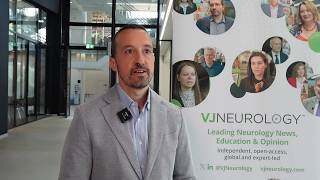
Gerrit M. Grosse, MD, PhD, University Hospital Basel, Basel, Switzerland, discusses the use of inflammatory biomarkers to guide secondary stroke prevention. Dr Grosse notes that inflammation plays a central role in the pathophysiology of stroke, and he identifies potential targets that could tackle the disease burden of recurrent events. This interview took place at the 11th European Stroke Organisation Conference (ESOC) in Helsinki, Finland.
These works are owned by Magdalen Medical Publishing (MMP) and are protected by copyright laws and treaties around the world. All rights are reserved.
Transcript
There is still a pressing need in optimizing the secondary prevention after stroke. The recurrence rates after stroke are still alarmingly high and we do not really have appropriate measures as of now to hand to really tackle this disease. So, inflammation is really a cornerstone in the pathophysiology of stroke. So there’s a broad body of evidence showing that inflammation really occurs after a stroke, that we get like a very urgent release of cytokines and leukocytes released to the circulation followed by an immunodepressant phase and then a really chronic phase where we have an enlargement of distinct cytokines and DAMPs in the long term even...
There is still a pressing need in optimizing the secondary prevention after stroke. The recurrence rates after stroke are still alarmingly high and we do not really have appropriate measures as of now to hand to really tackle this disease. So, inflammation is really a cornerstone in the pathophysiology of stroke. So there’s a broad body of evidence showing that inflammation really occurs after a stroke, that we get like a very urgent release of cytokines and leukocytes released to the circulation followed by an immunodepressant phase and then a really chronic phase where we have an enlargement of distinct cytokines and DAMPs in the long term even. And we also know there’s also a pre-inflammatory phase occurring before the stroke leading to clot formation via immunothrombosis for example, but also activation of atherosclerotic plaques. And on the other hand, we also have an inflammatory response after stroke that is all activating these mechanisms. So actually there could be novel targets to really tackle the disease burden of recurrent events by addressing actually these mediators that could be then reducing the overall occurrence of recurrent events. For example, cell-free DNA. Cell-free DNA is a damage-associated molecular pattern. This is released during stroke, not only by dying brain cells, but also by neutrophil extracellular traps. We know that this cell-free DNA is really pro-inflammatory, but also pro-thrombotic. Shown in translational work, the reduction of cell-free DNA by DNases could really also provide a reduction of recurrent events in that manner. So that could be really an application in this regard.
This transcript is AI-generated. While we strive for accuracy, please verify this copy with the video.
Read more...