ESOC 2024 | AI tool reduces biases in stroke detection during emergency calls
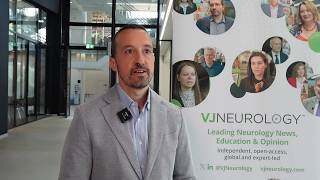
Jonathan Wenstrup, MD, PhD Candidate, Herlev Hospital, Herlev, Denmark, discusses the presence of biases in artificial intelligence. His team have been developing a machine learning algorithm to support emergency call handlers in identifying stroke by analyzing call data and predicting if a call was related to stroke or not. Having been trained on a data set of 1.5 million calls, the algorithm was tested on another data set of 344,000 calls, where it outperformed call handlers in both total stroke recognition and positive predictive value. Dr Wenstrup wanted to look at the presence of bias in their algorithm. He explains that call handlers showed a bias toward recognizing men over women and older people over younger individuals. Machine learning algorithms, while inheriting some of these biases, still performed better and helped reduce disparities, improving more on recognizing women and younger individuals. Though the study lacked data on race and ethnicity, Dr Wenstrup suggests that similar bias reduction could occur with these variables if algorithms are used in conjunction with human decision-making.
This interview took place at the 10th European Stroke Organisation Conference (ESOC) 2024 in Basel, Switzerland.
These works are owned by Magdalen Medical Publishing (MMP) and are protected by copyright laws and treaties around the world. All rights are reserved.