AAN 2026 | The prevalence and impact of post-stroke aphasia
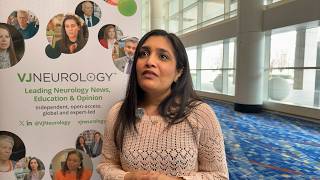
Priyanka Shah-Basak, PhD, Medical College of Wisconsin, Milwaukee, WI, discusses the prevalence and impact of post-stroke aphasia. Dr Shah-Basak notes that this condition can lead to significant challenges, including the inability to return to work, communicate with loved ones, and advocate for oneself, making it a life-changing disability. This interview took place at the 78th American Academy of Neurology (AAN) Annual Meeting in Chicago, IL.
These works are owned by Magdalen Medical Publishing (MMP) and are protected by copyright laws and treaties around the world. All rights are reserved.
Transcript
Yeah, post-stroke aphasia is pretty common immediately after a stroke, but there is spontaneous recovery, natural recovery, weeks and months after a stroke. And so the type of people and the type of aphasia that we work with is chronic aphasia after months and years after a stroke. And the prevalence of that is relatively low, but we know that currently in the U.S., there are about 2 million people that have that residual long-lasting aphasia into the years after a stroke...
Yeah, post-stroke aphasia is pretty common immediately after a stroke, but there is spontaneous recovery, natural recovery, weeks and months after a stroke. And so the type of people and the type of aphasia that we work with is chronic aphasia after months and years after a stroke. And the prevalence of that is relatively low, but we know that currently in the U.S., there are about 2 million people that have that residual long-lasting aphasia into the years after a stroke. So it is pretty common. It does have a catastrophic effect; it impacts everyday communication, so oftentimes people are not able to go back to work; they’re not able to communicate with their loved ones in the way that they used to, so it does really impact their day-to-day life. And people tend to think of stroke and physical disabilities, not being able to move their arms and their legs, and not being able to walk, but you can imagine that not being able to communicate and talk could have really lasting effects. And we’ve had patients who come to us, and when we ask them what it is that you would like us to work on, between physical disabilities and these hidden sort of language disabilities, people often say the language disabilities can be pretty catastrophic and pretty life-changing. And you can imagine that not being able to communicate could mean you cannot advocate for yourselves; you’re not able to share what your experiences are with aphasia, and so it becomes a really challenging disability.
This transcript is AI-generated. While we strive for accuracy, please verify this copy with the video.
Read more...