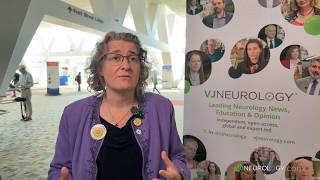
WSC 2025 | The influence of ancestral and geographic factors on ICH risks among Africans and Americans
Mayowa Owolabi, MD, University of Ibadan, Ibadan, Nigeria, discusses a study investigating the influence of ancestral and geographic factors on intracerebral hemorrhage (ICH) risks among Africans and Americans. The study combined data from the Stroke Investigative Research and Educational Network (SIREN) and ERICH (NCT01202864) studies to examine the interplay of ancestral and environmental risk factors across different populations. This interview took place at the 17th World Stroke Congress (WSC) in Barcelona, Spain.
These works are owned by Magdalen Medical Publishing (MMP) and are protected by copyright laws and treaties around the world. All rights are reserved.
Transcript
It’s very interesting when you try to understand risk factors that drive diseases. A hemorrhagic stroke, to start with, is receiving far too little attention, you know. Maybe because it is more common in LMICs. For instance, in Africa, it is about four times more common in Africa than it is in the U.S., for instance. So it’s understudied. And there’s no magic wand for hemorrhagic stroke, unlike ischemic stroke, whereby, I mean, you can give thrombolytic therapy if the patient qualifies, you can give thrombectomy, you know, but for hemorrhagic stroke, no magic wand like that...
It’s very interesting when you try to understand risk factors that drive diseases. A hemorrhagic stroke, to start with, is receiving far too little attention, you know. Maybe because it is more common in LMICs. For instance, in Africa, it is about four times more common in Africa than it is in the U.S., for instance. So it’s understudied. And there’s no magic wand for hemorrhagic stroke, unlike ischemic stroke, whereby, I mean, you can give thrombolytic therapy if the patient qualifies, you can give thrombectomy, you know, but for hemorrhagic stroke, no magic wand like that. So we need to understand the risk factors in order to be able to prevent it, both primarily as well as primordially. Now, it is very, very interesting that we had the opportunity of combining data from the Stroke Investigative Research and Educational Network, that SIREN study in Africa, you know, which has indigenous Africans, with the ERICH study. The ERICH study is in the US, but it has African Americans, Hispanic Americans, and white Americans. So we looked at different risk factors to see what is the effect size and direction of effects in those four different populations. So it became very exciting. So it helped us to look at the interplay of the ancestral, which are sometimes genetic, as well as environmental risk factors. It’s like looking at people from Africa who migrated to the US, perhaps the same genetics, but now different environment, and then seeing what the risk factors are. And apart from hypertension, which was common across all the different four groups, the other risk factors were really sometimes you have some that have effects in indigenous Africans, no effect in some of the other populations, or the direction is not clear in some of the other populations. So very, very exciting. So the follow-up study now is that we’re going to collect data simultaneously from these different groups and do trans-ancestry analysis of genetic factors using genome-wide association studies, using multi-omics, you know, hopefully we’ll get funding for that. And then that helps us then to tease out these factors at the molecular level. But we also step back a little to look at social, you know, environmental factors, commercial determinants, you know, which may vary across these populations. And then that gives us an understanding of the differences. And then eventually we might be able to come up with a trans-ancestral risk predictor engine, AI-powered for hemorrhagic stroke. And that will be really exciting.
This transcript is AI-generated. While we strive for accuracy, please verify this copy with the video.
Read more...