WSC 2025 | Global challenges in stroke rehabilitation and ongoing initiatives to address them
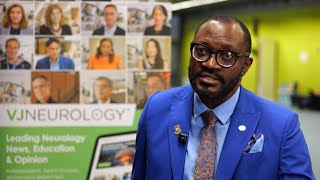
Mayowa Owolabi, MD, University of Ibadan, Ibadan, Nigeria, discusses global challenges in stroke rehabilitation and ongoing initiatives to address them. He highlights the work of the WSO-Lancet Commission on Stroke and the Lancet Commission on Neurorehabilitation, aiming to address the lack of availability of multidisciplinary care and epistemological challenges. This interview took place at the 17th World Stroke Congress (WSC) in Barcelona, Spain.
These works are owned by Magdalen Medical Publishing (MMP) and are protected by copyright laws and treaties around the world. All rights are reserved.
Transcript
I would say two major challenges. The first one is about availability of multidisciplinary care for patients with stroke who need neurorehabilitation. So it’s a huge challenge because in low- and middle-income countries, most of the personnel required are not there. There are countries in Africa, for instance, where there are no neurologists. There are countries where there are no physiotherapists...
I would say two major challenges. The first one is about availability of multidisciplinary care for patients with stroke who need neurorehabilitation. So it’s a huge challenge because in low- and middle-income countries, most of the personnel required are not there. There are countries in Africa, for instance, where there are no neurologists. There are countries where there are no physiotherapists. There are countries where there are no speech and language therapists, occupational therapists, or psychotherapists. Meanwhile, stroke presents itself with multifaceted impairment. Impairment in speech, in mobility, in cognition, and all of that. And you need teamwork, multidisciplinary teamwork, for the patient to get better and to have a better quality of life. So with this very huge, very very huge gap in personnel, it becomes extremely difficult. So that’s one challenge. The other challenge, generally for the field of neurorehabilitation, including stroke, is we’ve not really developed, I would say, a scientific model for assessing evidence. Because most RCTs, randomized controlled trials, that you have in the space for neurorehabilitation are underpowered and are too few. Because neurorehabilitation itself, most of the interventions are complex, multifaceted, multidisciplinary interventions. And in the end, you want to be able to say whether this is having an effect on the quality of life of the individual. So we probably need to come up with a new epistemological framework based on the principles of implementation science for pragmatic clinical trials that can actually look at multifaceted, complex interventions and their impact on the quality of life of patients. Because this is really patient-centered. At the end of the day, we want to improve the patient. We want to prolong life, add years to life, but also add life to years and add meaning to life. So from the perspective of the patient and the caregivers and the patient’s family and society, including participation, you know, how do we measure impact in a pragmatic way? So that’s one of the main challenges, epistemological challenges or framework that we need to develop. So one is about workforce. The other one is about generating evidence of pragmatic solutions that can be implemented across the globe. So in the Lancet Commission on Stroke, stroke rehabilitation is one of the pillars. There are four pillars of the stroke quadrangle that we addressed, which include surveillance, prevention, acute care, and rehabilitation. And at the very center of it is, of course, health systems. So rehabilitation has to be integrated into all of this for it to really work. Now, in the Lancet Commission on Neurorehabilitation, we are trying to address the epistemological challenges. We are also trying to do a survey of the services available across the globe for stroke rehabilitation. We are also doing a systematic review of the available evidence that is published in guidelines or RCTs that will help us to sieve out the main evidence-based rehabilitation interventions that can help to improve the quality of life of people living with stroke across the globe. And then having done that, we are looking at the barriers and the facilitators of this across six World Health Organization regions, comparing high-income countries and low- and middle-income countries across different thematic areas, and then looking at the political, legal, ethical, anthropological, and socioeconomic facilitators and barriers to implementation, and then fashioning out pragmatic solutions to navigate those barriers, amplify the facilitators, so that the interventions that we have selected, that are evidence-based, that are likely to have the greatest impact on about 3.4 billion people who have neurological disabilities across the globe, will eventually have the impact that is intended. We will also develop key performance indices, and of course, disseminate and implement through co-creation and implementation our interventions.
This transcript is AI-generated. While we strive for accuracy, please verify this copy with the video.
Read more...