WSC 2025 | The risk-benefit ratio of long-term anticoagulation following CVT
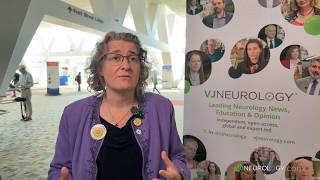
Diana Aguiar De Sousa, MD, PhD, Central Lisbon University Hospital Center, Lisbon, Portugal, shares insights on the risk-benefit ratio of long-term anticoagulation following cerebral venous thrombosis (CVT). Prof. Aguiar De Sousa highlights the increased risk of recurrence and the need for individualized assessment based on thrombotic and bleeding risk. She then goes on to share insights from the EXCOA-CVT trial (ISRCTN25644448). This interview took place at the 17th World Stroke Congress (WSC) in Barcelona, Spain.
These works are owned by Magdalen Medical Publishing (MMP) and are protected by copyright laws and treaties around the world. All rights are reserved.
Transcript
At the World Stroke Conference, we had a very lively and well-attended young stroke session. This session included one of the topics that I had the opportunity to discuss was the duration of anticoagulation after cerebral venous thrombosis. This is still an open question, despite new evidence in the last years. Especially, we were discussing what is the observational evidence that also supports this decision, and also what’s the risk that these patients face after cerebral venous thrombosis...
At the World Stroke Conference, we had a very lively and well-attended young stroke session. This session included one of the topics that I had the opportunity to discuss was the duration of anticoagulation after cerebral venous thrombosis. This is still an open question, despite new evidence in the last years. Especially, we were discussing what is the observational evidence that also supports this decision, and also what’s the risk that these patients face after cerebral venous thrombosis. There’s clearly an increased risk. This seems to be cumulative over time, not necessarily a front-loaded risk. These patients keep at risk during their lifetime. And so it is kind of a difficult question to solve the duration of anticoagulation, particularly in patients in whom we don’t identify a cause, that is a permanent cause or a permanent etiology or risk factor, that should definitely lead to permanent anticoagulation. So permanent anticoagulation is an indication, especially in patients that have recurrent events, that had a history of a previous event before CVT, so they have recurrent events. Or of course, if they have another event after CVT. And also in patients that have high thrombotic risk factors like antiphospholipid syndrome or severe thrombophilias that are associated with high risk. So these patients definitely, they will stay on long-term anticoagulation. They are still at risk. And so it is also important to discuss other things that we can do for these patients. But then after discussing all these issues and also the overall role of anticoagulation in CVT and all the other benefits that can also be associated, like improved recanalization and better outcomes also in terms of acute treatment. We were also discussing then what to do with these patients that don’t have this indication when to stop. And there is a question that is probably one of the most challenging questions. These are young patients, often females. And also the current evidence was very scarce, mostly based on other types of venous thrombosis for which the risk in the long term is not necessarily similar to CVT. So we finally discussed the emerging results of the EXCOA-CVT trial. We presented the 12-month results of this cluster randomized trial, also with a parallel observational prospective cohort study at ESOC in May. The 12-month results are a period where the two policies differed. So a group of patients, a group of centers, actually because it is a cluster randomized trial, were on the short-term policy and the other was on the long-term policy, meaning three to six months versus 12 months, and so when we compared at 12 months these two groups, there was no evidence of benefits in these patients that don’t have an indication for long-term definite anticoagulation, permanent anticoagulation. There was no difference in the venous thrombotic events or in the hemorrhagic events and no significant difference. But there was overall numerically higher rates of vascular death and overall death mortality in the group that was doing the long-term treatment. So overall, we could not see a benefit of extending in this short time window, so an early benefit. And also, there was this sign of possible harm. But of course, now we need the 24-month results. And also, this is a cluster randomized trial, so there are also limitations. And we still, of course, need to have an individualized assessment of these patients based on the bleeding risk, on the thrombotic risk, and all the other personal factors that influence the decision. And this was overall the discussion. We also touched a bit on the topic of what agents to use, so DOACs or vitamin K antagonists and what’s the evidence and also the role of the risk factors in this decision as well. So overall, it was a very good session with also the other topics and we could have a very interactive discussion then on the issues and the persisting questions also around what to do after stopping anticoagulation, aspirin, low-dose anticoagulation. So there was a lot of discussion as well.
This transcript is AI-generated. While we strive for accuracy, please verify this copy with the video.
Read more...