ESOC 2025 | Guideline updates from ESOC 2025: rehabilitation, visual impairment, and ICH
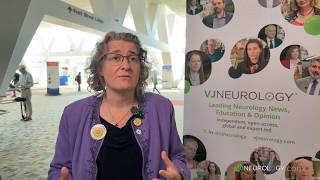
Diana Aguiar de Sousa, MD, PhD, from the Central Lisbon University Hospital Center, Lisbon, Portugal, comments on the four new guidelines presented at ESOC 2025, which cover important aspects of stroke care, including rehabilitation, visual impairment, and intracerebral hemorrhage (ICH). Dr Aguiar de Sousa highlights that these guidelines provide strong indications on what should be provided or not provided in clinical practice, and also identify gaps in the evidence, making them a valuable resource. This interview took place at the 11th European Stroke Organisation Conference (ESOC) in Helsinki, Finland.
These works are owned by Magdalen Medical Publishing (MMP) and are protected by copyright laws and treaties around the world. All rights are reserved.
Transcript
So, ESOC is very happy and we are very happy at the guideline board that there was the publication simultaneously with the presentation at ESOC of four new guidelines. These new guidelines cover very important aspects of stroke treatment. There were previously not covered or already very outdated. So these new fields, the first three are related with rehabilitation, which is the aphasia treatment guideline, the visual impairment screening and treatment guideline, and also on motor rehabilitation...
So, ESOC is very happy and we are very happy at the guideline board that there was the publication simultaneously with the presentation at ESOC of four new guidelines. These new guidelines cover very important aspects of stroke treatment. There were previously not covered or already very outdated. So these new fields, the first three are related with rehabilitation, which is the aphasia treatment guideline, the visual impairment screening and treatment guideline, and also on motor rehabilitation. So these three aspects of rehabilitation and assessment of patients with stroke is extremely relevant. And the experts in the field were organizing and screening all the evidence available according to the GRADE methodology, which is something very specific that the European guidelines, European stroke guidelines follow. So they were reviewing an enormous amount of evidence on these fields and focusing on some critical questions for practice and for patients and these guidelines provide strong indications on what should be provided or what should not be provided and also the gaps in the evidence and what should be some research aims for the future so I think these are very important documents in several ways both for stakeholders and for patient organizations and for clinicians to understand the needs, and also for clinical practice on what is the evidence behind these treatments, and also for the research that is planned, because they are very good in showing what are the gaps in the evidence in this difficult area of rehabilitation. Then we also had a very important guideline, major work on conducting this, let’s say, update, but a lot of questions are new, actually comparing with the previous versions on the intracerebral hemorrhage, so stroke related with ICH. This guideline is a very important document to guide clinical practice. So I really suggest that everyone goes to the European Stroke Journal and at least gives a look to the recommendations. And we hope we will also have some webinars in the near future to discuss better what are the recommendations and their application in clinical practice, there are many new studies on ICH, which is very good news. And this was also one of the reasons why the guideline was a bit delayed in this last stage because new evidence was coming. And we thought that it was really important to include this new evidence on the ICH guideline. So the guideline already includes new recommendations, very updated on surgical treatments, on use of andexanet alfa and other medications for the reversal of anticoagulation, and also the bundle of care, which was recently studied in some trials. So the guidelines are very updated, and we hope it’s a very useful tool for clinicians in the field that treat ICH, which I think are all stroke physicians.
This transcript is AI-generated. While we strive for accuracy, please verify this copy with the video.
Read more...

Disclosures
Speaker fees: Bial and Astrazeneca; Advisory board participation: Bayer, Daiichi-Sankyo, Organon and Johnson & Johnson.