ESOC 2026 | Key updates and remaining research gaps from the Alzheimer’s Association ARIA workgroup
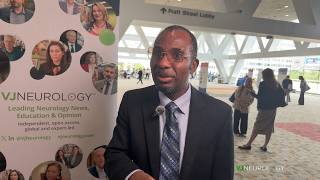
Ellis Van Etten, MD, Leiden University Medical Center, Leiden, Netherland, shares key updates from the recent Alzheimer’s Association ARIA workgroup, which aimed to further understand the underlying pathophysiology of amyloid-related imaging abnormalities (ARIA), to improve early detection and risk predictions. Dr Van Etten notes that significant research gaps remain, including the need for improved biomarkers, better detection of underlying cerebral amyloid angiopathy (CAA), expanded pre-clinical research, and greater use of real-world evidence. This interview took place at the 12th European Stroke Organisation Conference (ESOC) in Maastricht, The Netherlands.
These works are owned by Magdalen Medical Publishing (MMP) and are protected by copyright laws and treaties around the world. All rights are reserved.
Transcript
Yes, so with this workgroup we tried to give an update and really collect all the evidence from the trials, but also from preclinical models and histopathology to really try to pin down the underlying pathophysiology of ARIA. And also we discussed the challenges and how we would recommend putting very good protocols into place to really try to detect ARIA in an early phase and then mitigate the risk of developing severe ARIA...
Yes, so with this workgroup we tried to give an update and really collect all the evidence from the trials, but also from preclinical models and histopathology to really try to pin down the underlying pathophysiology of ARIA. And also we discussed the challenges and how we would recommend putting very good protocols into place to really try to detect ARIA in an early phase and then mitigate the risk of developing severe ARIA. And also we try to really address the open questions so really the remaining research gaps for future research because we still need to learn much more about these side effects. So I think the remaining questions are we should look for better biomarkers to help us predict the risk of ARIA. Trying to really detect underlying CAA because it does not always show on the MRI. And also more research on preclinical models would be very helpful. And lastly, I would say it is very important to look at the real-world evidence because these antibodies are now given to people around the world and we really need to watch them closely and see what happens.
This transcript is AI-generated. While we strive for accuracy, please verify this copy with the video.
Read more...

Disclosures
Research contract with Alnylam Pharmaceuticals Inc. to recruit patients for a clinical trial paid to Leiden University Medical Center and an advisor/consultant to Biogen, also paid to Leiden University Medical Center.