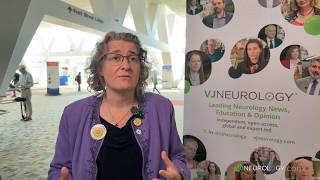
ISC 2025 | Intravenous tirofiban as an adjunct to EVT in posterior circulation strokes with tandem lesions
Mohamed Doheim, MD, The University of Pittsburgh Medical Center (UPMC), Pittsburgh, PA, discusses the use of endovascular thrombectomy (EVT) in patients with posterior circulation strokes with tandem lesions. He then goes on to speak about a study investigating intravenous tirofiban as an adjunct to EVT in this patient population, which found significantly improved short-, intermediate-, and long-term outcomes in those who received tirofiban compared to those who didn’t. This interview took place at the 2025 International Stroke Conference (ISC), held in Los Angeles, CA.
These works are owned by Magdalen Medical Publishing (MMP) and are protected by copyright laws and treaties around the world. All rights are reserved.
Transcript
Okay, that sounds great. So as you may know, VERITAS study, it was a meta-analysis of patient level data that was recently published in The Lancet, and it basically showed a dramatic benefit for endovascular thrombectomy and vertebral basilar occlusions, like 2.5-fold increase of good functional outcome defined as MRS 0 to 3, but despite the higher risk of sICH, it was also associated with reduced mortality and overall disability...
Okay, that sounds great. So as you may know, VERITAS study, it was a meta-analysis of patient level data that was recently published in The Lancet, and it basically showed a dramatic benefit for endovascular thrombectomy and vertebral basilar occlusions, like 2.5-fold increase of good functional outcome defined as MRS 0 to 3, but despite the higher risk of sICH, it was also associated with reduced mortality and overall disability. That was great and it paved the road for endovascular thrombectomy to be the first line of care for vertebro-basilar occlusion. But sadly, patients with posterior circulation tandem lesions were excluded from most of the randomized trials included in this meta-analysis, while they represent around up to 29, so they represent about up to 29 percent of the patients from posterior circulation strokes. So our aim at the beginning in the positive study was to see if endovascular thrombectomy is a viable option and trusted option for those patients and that’s what we did we found that the good functional outcome in those patients is 40 percent defined as MRS 0 to 3 and the mortality was shy to 40% as well and that’s quite comparable to the findings from VERITAS trial. So we can certainly say that endovascular thrombectomy for this group of patients is a good option to consider and maybe also as a standard of care because it’s ethically hard to do another prospective randomized trial for those patients. One other pressing question we were interested in was stenting versus non-stenting and here I mean extracranial stenting and we found that stenting is better than non-stenting in a recent study that we just published in Journal of Stroke and building on this story we were testing intravenous tirofiban so we were testing the intravenous tirofiban for this group of patients with posterior circulation tandem lesion. And when I say posterior circulation tandem lesion I mean an occlusion in the vertebral basilar artery extracranial v1 to v3 along with another occlusion intracranial v4 basilar occlusion with all segments proximal, middle and distal and also posterior circulation, posterior cerebral artery as well. So if you have steno occlusion more than 70% in the extracranial vertebral artery, it also qualified in our study if we have impaired the feeling of collaterals on the other side of the vert. As you know for tirofiban, it’s a glycoprotein 2B, 3A, and it has a short half life, fast acting, so it can be used in acute setting compared to oral aspirin, it could be the grail. And in our group of patients, we opted to use it just because we were aware of the RESCUE BT trial that we just published recently, which showed that IV tirofiban may not be significantly different than placebo in anterior circulation proximal occlusions. However in a post hoc analysis focusing on the ICAD patients it showed lower number of thrombectomy attempts along with good functional outcome at 90 day and that made us like you know when I like tested in that group of patients that were studying in the positive studies a posterior circulation tandem lesion group. So we conducted the study across more than 50 centers in China coordinated with the group there and we included 126 patients in the tirofiban group and also included 82 patients in the non-tirofiban group and in terms of baseline characteristic we didn’t find anything statistically significant or unbalanced except for like age was slightly numerically higher in the non-tirofiban group and smoking was higher in the tirofiban group and it was associated with atherosclerosis etiology which would make sense as we said like the tyrophoban would be working more in the atherosclerotic etiologist compared to cardiombolic and atrial fibrillation on the other hand was higher in the non-tirofiban group. In terms of outcome we did univariable analysis and multivariable binary logistic regression ordinary logistic regression. In univariate analysis we found significantly different short intermediate and long-term outcome in favor of tirofiban and it was numerically higher across all the NIH SS 24-hour NIH SS discharge early neurological improvements and the same for functional outcome good functional outcome and functional independence and reduced mortality at 90 days and at one year. We did also multivariable logistic regression where we adjusted for the baseline imbalance along with the age and NIHSS, and the results were consistent to confirming a higher value of tirofiban with osteoarthritis more than three compared to the non-tirofiban, showing a great benefit for tirofiban and posterior circulation tandem lesions. So we can certainly interpret this data by saying that tirofiban, IV tirofiban, can be a good addition to the cocktail of medication we’re offering for patients with posterior circulation tandem lesions. However, there are some considerations. The first consideration would be the optimum dose. There is no research right now that would make it clear what is the optimum dose. We’re adopting doses from cardiology and PCI treatment, but we don’t have our own doses. So we need more studies to establish the optimal dose for those patients. One other consideration is the selection of the right population. So, for example, the patients with ICAS or the patients ineligible to IVT may be favored for tirofiban compared to cardioembolic or the patients who are at risk of bleeding with combined medications. And that’s generally the study. It suffered from a little bit of limitation of retrospective design, but it’s the biggest study out there focused on this topic. Thank you so much.
This transcript is AI-generated. While we strive for accuracy, please verify this copy with the video.
Read more...