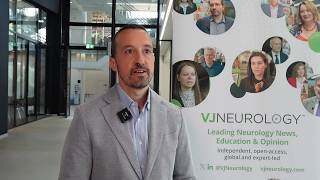
ESOC 2026 | Which anticoagulant agent should be used in CVT?
Diana Aguiar de Sousa, MD, PhD, Central Lisbon University Hospital Center, Lisbon, Portugal, shares insights into which anticoagulant agent is most effective in preventing recurrent events in patients with cerebral venous thrombosis (CVT). Dr Aguiar de Sousa highlights several trials indicating that direct oral anticoagulants have a similar risk profile to vitamin K antagonists. This interview took place at the 12th European Stroke Organisation Conference (ESOC) in Maastricht, The Netherlands.
These works are owned by Magdalen Medical Publishing (MMP) and are protected by copyright laws and treaties around the world. All rights are reserved.
Transcript
So the choice of anticoagulants in EXCOA-CVT was up to the treating physician. Of course, this was a very long study, nine years of inclusion and another two years of follow-up. So overall, we had a long period, especially up to 2018, where most of the patients were on VKA and then a more recent period of inclusion where a lot of patients were on DOACs. So overall, we do have these two groups represented and all analyses were accounting for these differences as well...
So the choice of anticoagulants in EXCOA-CVT was up to the treating physician. Of course, this was a very long study, nine years of inclusion and another two years of follow-up. So overall, we had a long period, especially up to 2018, where most of the patients were on VKA and then a more recent period of inclusion where a lot of patients were on DOACs. So overall, we do have these two groups represented and all analyses were accounting for these differences as well. But we do aim to do a sub-study then comparing, although this was not the aim of the study, comparing also the recurrent events and the bleeding risk, both in patients with DOACs and on VKA.
However, we know from other studies that have been focused on that specific question, particularly DOAC-CVT, a prospective observational study, no difference, published last year in Lancet Neurology, a follow-up study also to be finished soon. Also other studies like the retrospective ACTION-CVT study, the RESPECT-CVT trial, the SECRET trial, just the pilot phase, but still overall all these studies, also a Chinese study. So overall we do have quite a lot of evidence now and all the evidence goes in the direction that probably DOACs have a similar risk profile benefit or at least are non-inferior to vitamin K antagonists. Some sub-analyses have some little differences. For example, in DOAC-CVT, we found that the recanalization rates were a bit better with VKA. And SECRET, although it was a very small study, just a pilot study, all the events occurred in patients with rivaroxaban. So there are still some details probably to explore. But overall, the conclusion of these studies is very much in favor of not a different, significantly different risk by using DOACs. And of course, it is much more practical treatment for this young population of patients with cerebral venous thrombosis and also in terms of bleeding risk and there may be a trend towards better safety profile as well.
This transcript is AI-generated. While we strive for accuracy, please verify this copy with the video.
Read more...

Disclosures
Speaker fees: Bial, Astrazeneca; Advisory board participation: Bayer, Daiichi-Sankyo, Organon, Johnson & Johnson.