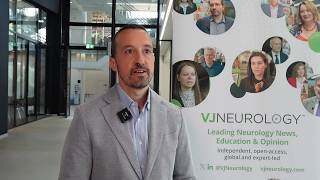
UK Stroke Forum 2025 | Clinical features associated w/ acute cerebral ischemia on DWI-MRI in suspected TIA & minor stroke
Arvind Chandratheva, BM, BSc (Hons), MRCP, DPhil, University College London Hospitals NHS Foundation Trust, London, UK, discusses the clinical features associated with acute cerebral ischemia on DWI-MRI in suspected transient ischemic attack (TIA) and minor stroke. Dr Chandratheva notes that certain features, such as two or more vascular risk factors, can predict high risk of ischemia, and emphasizes the importance of assessing patients with new onset neurological syndromes, even if they do not fit the typical consensus model. This interview took place at the UK Stroke Forum (UKSF) 2025 Conference in Aberdeen, UK.
These works are owned by Magdalen Medical Publishing (MMP) and are protected by copyright laws and treaties around the world. All rights are reserved.
Transcript
So I think this is a really interesting area in that what are the clinical predictors that correlate with high risk of ischemia, i.e. changes on a DWI? So what we decided to look at is every patient that came over the last two years to our unit with a TIA or minor stroke that had positivity on their DWI MRI sequence. So there’s no doubt that event is ischemic. It’s positive on the MRI...
So I think this is a really interesting area in that what are the clinical predictors that correlate with high risk of ischemia, i.e. changes on a DWI? So what we decided to look at is every patient that came over the last two years to our unit with a TIA or minor stroke that had positivity on their DWI MRI sequence. So there’s no doubt that event is ischemic. It’s positive on the MRI. And then we went back and looked through the history in detail to see what were their presenting symptoms. Was it progressive? Was it sudden onset? Was it fluctuant? Was it tingling? Was it positive? Was it negative? And we found that 38% presented in atypical or non-consensus manners, i.e. they didn’t fit the stereotype of sudden onset weakness, sudden onset numbness, sudden onset speech symptoms. That’s really interesting to me because we base a lot of what we do when we see patients on their initial presenting history. And we know in our series, certainly 38% of the time, you might be led in the wrong direction. There seem to be certain features that predict high risk. That’s two or more vascular risk factors associated with the syndrome or certain situations in which that will arise, i.e. a Valsalva or head or neck pain. But I think what I’m really saying is that we should be open to assessment of these patients with new onset neurological syndromes in the context of vascular risk factors, even if it doesn’t quite fit the typical consensus model or if there’s the right situation, head or neck injury or Valsalva.
This transcript is AI-generated. While we strive for accuracy, please verify this copy with the video.
Read more...