UK Stroke Forum 2025 | Optimizing outcomes in acute central retinal artery occlusion
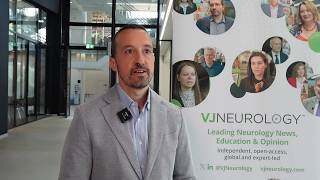
In this video, Arvind Chandratheva, BM, BSc (Hons), MRCP, DPhil, University College London Hospitals NHS Foundation Trust, London, UK, discusses the importance of rapid recognition and assessment of acute central retinal artery occlusion, highlighting the need for good working relationships between pre-hospital teams and ophthalmologists to optimize outcomes. Dr Chandratheva emphasizes the importance of early intervention, ideally within 90 minutes to four hours, and notes that patients presenting with retinal ischemia are at increased risk of future stroke and myocardial infarction, making it a crucial opportunity for prevention. This interview took place at the UK Stroke Forum (UKSF) 2025 Conference in Aberdeen, UK.
These works are owned by Magdalen Medical Publishing (MMP) and are protected by copyright laws and treaties around the world. All rights are reserved.
Transcript
I think this is a great question. And I think the first thing is for pre-hospital has to recognise that monocular visual loss could represent a central retinal artery occlusion, and working with ophthalmology, having pathways for us to rapidly see these patients, whether that be in a hyperacute stroke unit or if it’s a resolved event in a TIA clinic. And I think that’s the first step, good working relationships with ophthalmologists...
I think this is a great question. And I think the first thing is for pre-hospital has to recognise that monocular visual loss could represent a central retinal artery occlusion, and working with ophthalmology, having pathways for us to rapidly see these patients, whether that be in a hyperacute stroke unit or if it’s a resolved event in a TIA clinic. And I think that’s the first step, good working relationships with ophthalmologists. And we, as a result of this, have set up an eye stroke MDT to discuss the outcomes of our cases, to talk about advanced imaging, for example, we’re using things like OCT and OCTA. So I think that’s a very first step.
And then I think it’s an understanding of, well, what is the sensitivity of the retina? And studies have shown that the retina is an extremely oxygen-requiring organ – it’s very sensitive to ischemia. And probably you need to be reversing changes within 90 minutes and just about up to four hours. So interventions that may have a benefit have to be done early, and that means that we have to identify these patients quickly. And therefore, that’s the only way we’re going to get better, I guess, effective interventions. There is one other point, and that is patients presenting with retinal ischemia, whether transient or occlusive, like central or branch retinal artery occlusion, do represent a real opportunity for prevention. These patients in the longer term have risks of stroke, death, and myocardial infarction. So if nothing else, we should be using this as a good opportunity for prevention.
This transcript is AI-generated. While we strive for accuracy, please verify this copy with the video.
Read more...