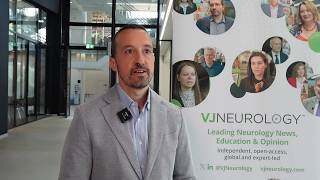
UK Stroke Forum 2025 | The challenges associated with defining “disabling” stroke
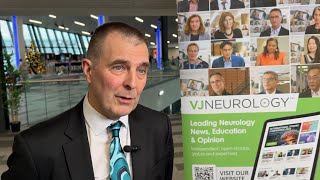
Keith Muir, MD, PhD, University of Glasgow, Glasgow, UK, discusses the challenges of defining “disabling” stroke. He notes that current evidence is based on a low score on the NIH stroke scale, as well as specific components such as vision, speech, and level of consciousness. Prof. Muir highlights the subjective nature of disability, which can vary greatly between individuals depending on their unique needs and circumstances. This interview took place at the UK Stroke Forum (UKSF) 2025 Conference in Aberdeen, UK.
These works are owned by Magdalen Medical Publishing (MMP) and are protected by copyright laws and treaties around the world. All rights are reserved.
Transcript
It’s a difficult topic because I think disabling is very subjective and most of the trials that have looked into this question have struggled by either using a low score on the NIH stroke scale or various combinations of individual symptoms within that. So we would currently say the evidence is based on, first of all, saying low score, somewhere between zero and five on the NIH scale. But you may also need to take into account specific components of that, such as vision, speech, level of consciousness...
It’s a difficult topic because I think disabling is very subjective and most of the trials that have looked into this question have struggled by either using a low score on the NIH stroke scale or various combinations of individual symptoms within that. So we would currently say the evidence is based on, first of all, saying low score, somewhere between zero and five on the NIH scale. But you may also need to take into account specific components of that, such as vision, speech, level of consciousness. And of course, there’s an added element of subjectivity, which is for that individual would this deficit be considered disabling and that may not be the same from the same deficit in different people depending on what their individual needs are. So it is a very challenging area and one which currently lacks a very clearly agreed definition.
This transcript is AI-generated. While we strive for accuracy, please verify this copy with the video.
Read more...

Disclosures
Consultancy: Boehringer Ingelheim, Takeda; Lecture Fees: Boehringer Ingelheim, IschemaView, Brainomix; Advisory Boards: Boehringer Ingelheim. ATTEST-2 supported by Boehringer Ingelheim (drug supply of Tenecteplase), the British Heart Foundation and the Stroke Association. CATALYST-TNK supported by an unrestricted grant from Boehringer Ingelheim.