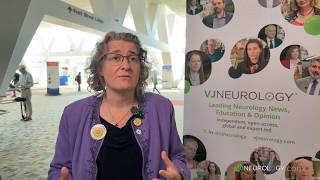
UK Stroke Forum 2025 | Implementation of the ICH Assessment, Consultation and Treatment (ACT) care bundle
Alice Hosking, MPhys, MBBS, MRCP, The University of Edinburgh, Edinburgh, UK, shares insights from an audit investigating the implementation of the intracerebral hemorrhage (ICH) ACT care bundle. Dr Hosking highlights that the use of the care bundle has increased over time, and suggests that the care bundle has raised awareness about the urgency of treatment for ICH. This interview took place at the UK Stroke Forum (UKSF) 2025 Conference in Aberdeen, UK.
These works are owned by Magdalen Medical Publishing (MMP) and are protected by copyright laws and treaties around the world. All rights are reserved.
Transcript
So in Edinburgh, we’ve been using a care bundle for intracerebral hemorrhage called ICH ACT, which stands for Assessment, Consultation and Treatment. And this care bundle has been rolled out across hospitals in the NHS Lothian region, in the emergency department and among stroke teams. And we know that care bundles improve outcomes for people with intracerebral hemorrhage. So we’ve been doing a population-based audit of people with intracerebral hemorrhage from 2018 to 2021...
So in Edinburgh, we’ve been using a care bundle for intracerebral hemorrhage called ICH ACT, which stands for Assessment, Consultation and Treatment. And this care bundle has been rolled out across hospitals in the NHS Lothian region, in the emergency department and among stroke teams. And we know that care bundles improve outcomes for people with intracerebral hemorrhage. So we’ve been doing a population-based audit of people with intracerebral hemorrhage from 2018 to 2021. And over that time period, we looked at how many people had the care bundle used. And we also looked at different components of the care bundle to see whether they were used or whether that increased over the time of the audit. And we found that about half of patients had the care bundle used. But what was particularly good to see was that the use of acute blood pressure lowering increased among all patients across the time period of the study. Some of the other aspects were harder to measure, such as anticoagulation reversal, because actually there’s not that many patients who are eligible for anticoagulation reversal. But we hypothesise that by bringing in a care bundle and providing education to the emergency department, the stroke team and others, we’ve increased awareness about intracerebral hemorrhage as a disease and the urgency of treatment. So even in patients where the care bundle wasn’t documented, people were more likely to have treatments that can make a difference to their outcome.
This transcript is AI-generated. While we strive for accuracy, please verify this copy with the video.
Read more...