ESOC 2025 | Stroke in women: understanding disparities and the need for additional research
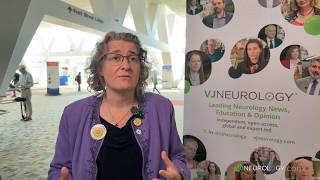
Lynda Lisabeth, MPH, PhD, University of Michigan, Ann Arbor, MI, discusses the unique impact of stroke on women. She highlights their older age at stroke onset, increased likelihood of being widowed and living alone, and worse stroke outcomes, including functional, cognitive, and post-stroke depression outcomes. Dr Lisabeth emphasizes the need for additional research to understand the underlying factors contributing to these disparities, including post-acute care, rehab effectiveness, and secondary stroke prevention measures. This interview took place at the 11th European Stroke Organisation Conference (ESOC) in Helsinki, Finland.
These works are owned by Magdalen Medical Publishing (MMP) and are protected by copyright laws and treaties around the world. All rights are reserved.
Transcript
Women are definitely uniquely impacted by stroke. A couple of the ways that we have seen this is that women are older when they have their strokes compared to men, so they are more likely to be widowed and living alone, so they have some unique social determinants of health at the time of stroke. This is partly due to women having an increased life expectancy, which is why we see strokes at older ages...
Women are definitely uniquely impacted by stroke. A couple of the ways that we have seen this is that women are older when they have their strokes compared to men, so they are more likely to be widowed and living alone, so they have some unique social determinants of health at the time of stroke. This is partly due to women having an increased life expectancy, which is why we see strokes at older ages. One thing that has been clearly demonstrated is that women have worse stroke outcomes. So they do worse following stroke. And this is true with respect to functional outcome, but other outcomes as well, like cognitive outcome and things like post-stroke depression. And we don’t really know why that is. We know that there are a few things that contribute to it, but don’t fully explain it. So because women are older, that’s one reason. Women tend to have more severe strokes than men and they also tend to have worse pre-stroke health. So those factors contribute to why women do worse, but don’t fully explain that difference. And so I think there’s a need for additional research to try to better understand why women fare worse. So, for example, are there differences in post-acute care or rehab effectiveness? And these are some of the factors that we’re interested in looking at. We’re also interested in thinking about secondary stroke prevention in women. We’ve done some recent work to suggest that there may be differences in the use of secondary stroke prevention measures in women compared to men. So that could possibly be an intervention point where we could try to improve secondary stroke prevention and prevent that second stroke from happening, which we know is associated with worse outcome and greater mortality.
This transcript is AI-generated. While we strive for accuracy, please verify this copy with the video.
Read more...