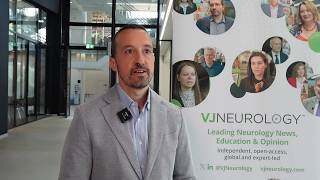
UK Stroke Forum 2025 | Barriers to accessing rehabilitation services in low- and middle-income countries
Sureshkumar Kamalakannan, BOT, MPH, PhD, Northumbria University, Newcastle, UK & Global Consortium for Stroke Rehabilitation (GCSR), discusses the barriers to accessing rehabilitation services in low- and middle-income countries, highlighting the five A’s of accessibility: approach, acceptability, availability, affordability, and appropriateness. This interview took place at the UK Stroke Forum (UKSF) 2025 Conference in Aberdeen, UK.
These works are owned by Magdalen Medical Publishing (MMP) and are protected by copyright laws and treaties around the world. All rights are reserved.
Transcript
In terms of barriers, something that’s been the key problem in almost all the low- and middle-income countries, especially when it comes to not just stroke care, but for any person with a disability, is the access to rehabilitation. In terms of access to rehabilitation, it’s not just about getting a service from one place to another and then seeking rehabilitation care in a hospital setting or a rehabilitation center...
In terms of barriers, something that’s been the key problem in almost all the low- and middle-income countries, especially when it comes to not just stroke care, but for any person with a disability, is the access to rehabilitation. In terms of access to rehabilitation, it’s not just about getting a service from one place to another and then seeking rehabilitation care in a hospital setting or a rehabilitation center. In terms of access, I’m looking at the approach to the provision of rehabilitation services, the acceptability of the intervention that’s actually available for people in the name of stroke care or rehabilitation, the availability of the service, the affordability of the service, and the appropriateness of the service as well. So, there are five A’s when I say accessibility is a major barrier. And there are solutions and strategies to address accessibility from all these five angles. But it’s not the same strategy. It has to be different for each of these points. Say, for example, if I’m talking about accessibility, especially from a physical, environmental perspective, we’ve got to look at where exactly you get stroke services. At the minute, in many low- and middle-income countries, these services are only available in private hospitals, which are expensive and which are actually based in super cities in almost all the low- and middle-income countries. So, the entire rural regions in the low- and middle-income countries where a stroke survivor may be dwelling do not have any availability of those services. So, you’ve got to look at those kinds of people who are actually affordably coming to a rehabilitation center, getting good-quality, safe, and effective service. So, that’s one of the strategies. The second strategy has always been something that’s very important but always neglected, which is the government institutions taking charge of the rehabilitation services as well, by not excluding it as a service that’s related to charity and social welfare, but to look at that as a component of the healthcare system and healthcare service provision, where you’re integrating rehabilitation at the primary care level, looking at anybody who comes to you, not just for an illness or a disease, or for screening or diagnostics, but also to look at the disability and then looking at the ways to integrate that specific person back into their own community through primary healthcare. Last but not least, something that’s been tremendously spoken about all over the world is the technological advancements that are happening. You can obviously use technology as a key driver to address the barrier of access to stroke care services throughout any low- and middle-income countries, provided you connect and collaborate with the right kind of people, and then ask the right questions in terms of what I am developing as an innovation to connect the community and ensure continuum of care. And also, look at it from the scientific perspective, rather than just from a developmental perspective, where I have enough funds to develop an innovation, and then I would like that to be bought by any private sector again. So, looking at something that can be observed by the government system, something that’s very relevant, at the same time rigorously developed.
This transcript is AI-generated. While we strive for accuracy, please verify this copy with the video.
Read more...