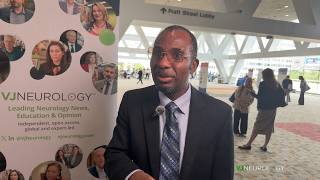
ESOC 2025 | Combining pharmacological and non-pharmacological treatments in vascular cognitive impairment
Terence Quinn, MD, MRCP, MBCHB (hons), University of Glasgow, Glasgow, UK, emphasizes the importance of considering both pharmacological and non-pharmacological treatments in vascular cognitive impairment. He highlights the importance of encouraging modifications to lifestyle risk factors, which he believes can lead to improved outcomes in vascular cognitive impairment. This interview took place at the 11th European Stroke Organisation Conference (ESOC) in Helsinki, Finland.
These works are owned by Magdalen Medical Publishing (MMP) and are protected by copyright laws and treaties around the world. All rights are reserved.
Transcript
Whenever I think about treatments, I always think about both drug and non-drug treatments, and we shouldn’t think of them in isolation. What we’ve learned from the Alzheimer’s field is that multi-component interventions have the greatest efficacy. So I think we’re going to move to a similar lens of looking at treatment in vascular cognitive impairment. We’re going to start to compare evidence-based drug treatments, both prevention and treatments if they come along, with non-pharmacological treatments as well...
Whenever I think about treatments, I always think about both drug and non-drug treatments, and we shouldn’t think of them in isolation. What we’ve learned from the Alzheimer’s field is that multi-component interventions have the greatest efficacy. So I think we’re going to move to a similar lens of looking at treatment in vascular cognitive impairment. We’re going to start to compare evidence-based drug treatments, both prevention and treatments if they come along, with non-pharmacological treatments as well. Again, if we go back to all-cause dementia or Alzheimer’s dementia, we know from the Lancet Commission that there are lots of modifiable risk factors. And in middle age, many of those are lifestyle vascular risk factors. They’re things like smoking cessation, improving sedentary behaviour. So again, many people may think that this isn’t the realm of a cognitive neurologist, but I think what we need to be doing is public health messaging and getting people to attend to those modifiable risk factors.
This transcript is AI-generated. While we strive for accuracy, please verify this copy with the video.
Read more...

Disclosures
I chair Data Safety Monitoring Committees for trials in dementia run by NovoNordisk. I receive no personal payment for this work.