ISC 2026 | Prespecified secondary analysis of OCEANIC-STROKE: asundexian in ischemic stroke subtypes
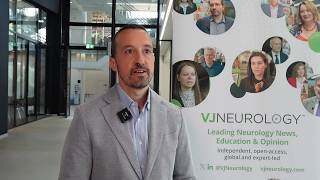
Ashkan Shoamanesh, MD, McMaster University, Population Health Research Institute, Hamilton, Canada, discusses a prespecified secondary analysis of the OCEANIC-STROKE trial (NCT05686070) assessing response to asundexian in ischemic stroke subtypes. Dr Shoamanesh highlights the consistency of treatment effects across different ischemic stroke subtypes, including large artery atherosclerosis, small vessel occlusive disease, and strokes of undetermined etiology. This interview took place at the 2026 International Stroke Congress (ISC), held in New Orleans, LA.
These works are owned by Magdalen Medical Publishing (MMP) and are protected by copyright laws and treaties around the world. All rights are reserved.
Transcript
OCEANIC-STROKE was a Phase III randomized controlled trial double-blinded with matching placebo control of patients with non-cardioembolic ischemic stroke or high-risk TIA who presented within 72 hours of symptom onset. These patients were randomized one-to-one to receive asundexian 50 milligrams daily or matching placebo, and randomization was stratified according to planned use of either dual antiplatelet therapy or single antiplatelet therapy...
OCEANIC-STROKE was a Phase III randomized controlled trial double-blinded with matching placebo control of patients with non-cardioembolic ischemic stroke or high-risk TIA who presented within 72 hours of symptom onset. These patients were randomized one-to-one to receive asundexian 50 milligrams daily or matching placebo, and randomization was stratified according to planned use of either dual antiplatelet therapy or single antiplatelet therapy. Participants were followed up to 31 months following the start of recruitment to a common termination date for our participants in this event-driven trial. In total, we enrolled 12,327 participants from over 700 sites in 37 countries, rather, in this large global initiative. The primary results of the trial were already presented by my colleague, Mike Sharma, this afternoon, where we show that asundexian reduced the hazard of the primary efficacy endpoint, which is time-to-first occurrence of ischemic stroke by 26%, and impressively without any excess in the primary safety endpoint of ISTH major bleeding or any of the bleeding endpoints that we looked at, including minor bleeding, which is really historic for the field of antithrombotic therapy.
Now, on the basis of the PACIFIC-Stroke trial, where we saw that patients at study entry may have had heterogeneity in their response to treatment according to baseline qualifying ischemic stroke subtype, we prioritized and pre-specified a secondary analysis of the OCEANIC-STROKE study to look at response to treatment to asundexian, depending on the qualifying ischemic stroke subtype at study entry. Qualifying ischemic stroke subtype was categorized according to the well-known TOAST criteria, and the three major groupings were large artery atherosclerosis, small vessel occlusive disease, and strokes of undetermined etiology. And also, because people had to have had an ischemic stroke for the subgroup analysis, we only look at those that had a qualifying ischemic stroke rather than a TIA at study entry that was 95% of the population or about 11,100 participants. You could imagine with such a large trial, these subgroups in and of themselves are quite large and informative. For instance, large artery atherosclerosis, there was 5,000 participants in the study with large artery atherosclerosis alone, which as far as I’m aware, that would make it the largest standing study of large artery ever conducted. When we look at stroke of undetermined etiology, there was about 3,500 patients with that stroke subtype. The second largest ESUS trial was about 5,000 participants. The third largest ESUS trial was ARCADIA. That was about 1,000 participants. So again, a large number of patients with cryptogenic stroke or stroke of undetermined etiology that got into the study. And we also provided, we are providing this study in this afternoon when I presented this data, a sensitivity analysis according to those that specifically meet criteria for embolic stroke of undetermined source. And then lastly, for strokes due to small vessel occlusive disease, there was about 2,600 patients in our trial. The largest trial ever conducted on lacunar strokes was the SPS3 trial, about 3,000 participants. So really large, informative subgroups for us to have some indication as to how generalizable are these findings with asundexian to the people that we treat in the breadth and scope of different ischemic stroke subtypes that we treat under the umbrella of non-cardioembolic ischemic stroke.
And what we found was that actually there is consistency across all ischemic stroke subtypes. The hazard ratio or the cause-specific hazard ratio for our outcome of time to first occurrence of ischemic stroke or primary efficacy endpoint range anywhere between 0.62 to 0.82. And there was no heterogeneity in the treatment effect. We also found consistency in reductions of disabling stroke as well as all stroke. And then when we looked at our safety endpoints in terms of ISTH major bleeding, intracranial hemorrhage, hemorrhagic stroke, some of the bleeding outcomes of greatest interest of stroke neurologists. We saw no heterogeneity or excess across the board. And importantly, actually, the rates of hemorrhagic stroke were numerically less with asundexian versus placebo in all ischemic stroke subtypes, including those with lacunar stroke or small vessel occlusive disease, who have the highest rate of ICH. And then lastly, when we looked in sensitivity analysis of patients who got into this study with embolic strokes of undetermined source, this is on the heels of four randomized trials that have thus far been unsuccessful in extending the envelope beyond aspirin monotherapy for stroke prevention in these patients for long-term prevention. And an actual individual participant data meta-analysis that we led and presented at this week’s Congress, that was presented by my colleague, Aristeidis Katsanos, showing that if we do an IPDMA or individual participant data meta-analysis of all the four trials, you cannot find a subgroup that benefits from a Factor Xa or a direct thrombin inhibitor versus aspirin alone. What we did find is that dual pathway inhibition using Factor XI inhibition on top of background antiplatelet therapy led to a robust reduction in stroke that was significant in patients with ESUS who got into the OCEANIC-STROKE trial, providing a new paradigm for them as well.
So really to conclude, OCEANIC-STROKE enrolled a large global representative sample of patients with non-cardioembolic ischemic stroke. And then all these patients, irrespective of stroke subtype, we found reductions that were consistent for ischemic stroke, disabling stroke, all stroke without any excess in bleeding endpoints, basically demonstrating that this is really going to be a new paradigm shift for all these patients, including those with ESUS.
This transcript is AI-generated. While we strive for accuracy, please verify this copy with the video.
Read more...