ESOC 2025 | The limitations of studies investigating inflammatory biomarkers after ischemic stroke or TIA
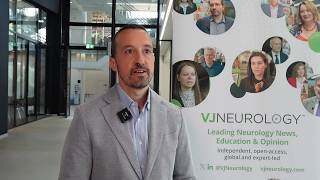
John McCabe, MB, BCh, BAO, MRCPI, PhD, Mater Misericordiae University Hospital, Dublin, Ireland, comments on the limitations of previous studies on inflammatory markers after ischemic stroke or transient ischemic attack (TIA). He emphasizes the need for standardized procedures and assays to accurately measure interleukin-6 and C-reactive protein (CRP) levels, as well as the importance of validating previous findings using a single assay. This interview took place at the 11th European Stroke Organisation Conference (ESOC) in Helsinki, Finland.
These works are owned by Magdalen Medical Publishing (MMP) and are protected by copyright laws and treaties around the world. All rights are reserved.
Transcript
Whilst we have shown that interleukin-6 and high sensitivity CRP are both independently associated with major vascular recurrence after ischemic stroke or TIA. There are a number of limitations to the previous work that we’ve carried out in this field. The biggest thing to note is that whilst we had large volumes of data from over 10,000 stroke patients, there was data from 12 studies, and therefore the study protocols and timing of sample measurement and assays used to measure these inflammatory markers, there were not standardized procedures across studies...
Whilst we have shown that interleukin-6 and high sensitivity CRP are both independently associated with major vascular recurrence after ischemic stroke or TIA. There are a number of limitations to the previous work that we’ve carried out in this field. The biggest thing to note is that whilst we had large volumes of data from over 10,000 stroke patients, there was data from 12 studies, and therefore the study protocols and timing of sample measurement and assays used to measure these inflammatory markers, there were not standardized procedures across studies. And for these reasons, particularly the concerns about the assay variability, it means that we still have a degree of uncertainty about what constitutes an elevated CRP level in the days after an ischemic stroke. Similarly, when we look at IL-6, a lot of the assays that were used in previous research were assays that are not used in clinical routine. One of the biggest needs, I think, in this field is to demonstrate what an elevated IL-6 level, an optimal IL-6 level is to discriminate patients from low, medium, and high risk. In order to move into clinical practice, I think it will be necessary to validate our previous work using a single assay, particularly for interleukin-6. And moving into the future, I think that it is very conceivable that we may be measuring blood inflammatory markers as part of clinical routine to identify patients with, well, I would term a residual inflammatory risk. And these patients may, in fact, benefit from pharmacological intervention with anti-inflammatory therapies in the future. However, this would be subject to demonstrating success of these therapies in future randomized controlled trials.
This transcript is AI-generated. While we strive for accuracy, please verify this copy with the video.
Read more...