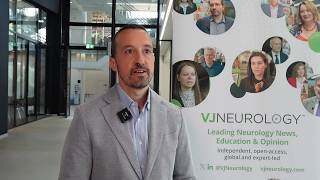
WSC 2025 | Factors contributing to the higher incidence of CVT in Asia
M.V. Padma Srivastava, MBBS, MD, DM, FAMS, All India Institute of Medical Sciences, New Delhi, India, discusses the various factors contributing to the higher incidence of cerebral venous thrombosis (CVT) in Asia. Prof. Srivastava highlights the need for targeted interventions, including awareness campaigns, improved health-seeking behavior, and better management of non-communicable diseases, to address these factors and reduce the risk of stroke. This interview took place at the 17th World Stroke Congress (WSC) in Barcelona, Spain.
These works are owned by Magdalen Medical Publishing (MMP) and are protected by copyright laws and treaties around the world. All rights are reserved.
Transcript
So as we understand what are those factors which are contributing to this increasing incidence and numbers, we also therefore they give you those portals or targets for intervention. So if I’m looking at alcohol use in young men and they’re clustered in certain regions, then I’ll have to get that awareness and improve the health-seeking behavior of the population. So, it includes an intervention in terms of awareness as regards, you know, the harmful effects of those lifestyles...
So as we understand what are those factors which are contributing to this increasing incidence and numbers, we also therefore they give you those portals or targets for intervention. So if I’m looking at alcohol use in young men and they’re clustered in certain regions, then I’ll have to get that awareness and improve the health-seeking behavior of the population. So, it includes an intervention in terms of awareness as regards, you know, the harmful effects of those lifestyles. So, that needs to change. The other is we still have to contribute to better obstetric care, a better oral contraceptive usage in terms of, you know, less estrogens and the upper grade of progestogens, not the level one, but the level two. And then we also have to look at the other lifestyles, so less of smoking. And even the NCDs which are changing, for example, you have a young woman who is also hypertensive and is taking OCP. She is more prone to develop a CVT. So, you need to have that strategized into this population. Deal with infections. You know, dengue is all over and you have this polymicrobial, you have a dengue on top of that you have say a scrub typhus coming in or melioidosis which is very common in the southern part of India so you have to deal with the infections control and then something needs to be done about climate and environment. So I think there are verticals that you can improve upon anemia try and take care of the nutritional aspects which may go into again lifestyle as well as you know awareness about that you know don’t look at your vitamin B, look at your folic acid, look at your hemoglobin which can be a mass, you know, a kind of a mass screening and a mass strategy of intervention. And I think it starts with the change in your lifestyle awareness changing your perspectives to global changes in terms of climate environment. Throw in infection control and all these things and better obstetric practices, probably that would help. And we haven’t even talked about the genetics because that’s one vertical which is growing again in our, the evidence is also growing in terms of what kind of those are genetic markers which are disposing to this. We don’t have interventions there, But all the others that I have spoken about, they could be targets for intervention.
This transcript is AI-generated. While we strive for accuracy, please verify this copy with the video.
Read more...