ISC 2025 | FAST-Kids: Achieving Fast Assessment and Stroke Triage in Kids
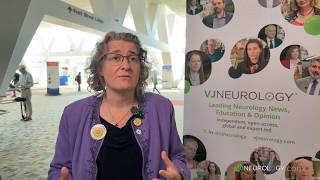
Rachel Pearson, MD, Children’s Hospital Orange County, Orange, CA, comments on the Achieving Fast Assessment and Stroke Triage in Kids (FAST-Kids) study, which assessed children taken to the hospital for acute neurological symptoms (ANS). Dr Pearson highlights that a small percentage of children admitted to hospital with ANS received imaging, and of those that had imaging done, the most common abnormal finding was a stroke. This suggests a significant opportunity to expedite imaging and offer more hyperacute interventions. This interview took place at the 2025 International Stroke Conference (ISC), held in Los Angeles, CA.
These works are owned by Magdalen Medical Publishing (MMP) and are protected by copyright laws and treaties around the world. All rights are reserved.
Transcript
So we are doing a study. This study is a collaborative effort from the University of California Stroke Consortium Pediatric Stroke Working Group. And it’s a multi-phase study with the goal of improving rapid detection of stroke in children through a process of care quality improvement intervention. And so the FAST assessment and stroke triage in kids is the name of the study or FAST kids study...
So we are doing a study. This study is a collaborative effort from the University of California Stroke Consortium Pediatric Stroke Working Group. And it’s a multi-phase study with the goal of improving rapid detection of stroke in children through a process of care quality improvement intervention. And so the FAST assessment and stroke triage in kids is the name of the study or FAST kids study. And we recently completed our first phase, which we’ll be sharing the results with, which is really characterizing the current practices for children who have EMS activation, meaning a 911 call for acute neurological deficits, and how those children are getting imaged in the emergency setting. So what we found, we had almost 4,000 children that presented to our hospital, which is a primary comprehensive children’s emergency receiving center for the county that had acute neurological deficits and were taken to the hospital for evaluation. And of these children, it was a small percentage of the 4,000 or so, that was about 700 that had any imaging done. And for those, there were about 570 that only had a CT scan, and then 125 that had both CT and MRI. And of those that had both imaging done, there were 53 children that had an abnormal MRI, and nine of those had a stroke. So when we looked at the percentages, we found that actually of the kids that had MRI imaging, almost one quarter of them had some actionable abnormal finding on the MRI. And the most common abnormal finding that we saw was a stroke, which suggests that there’s an opportunity here to expedite imaging. And hopefully, if we do that, we can offer more hyperacute interventions to these patients. The other thing that I wanted to mention about our FAST assessment and stroke triage in kids study was that for the first phase of the study, when we were kind of characterizing the baseline as far as imaging of children with 911 activations for acute neurological deficits, our primary endpoint was looking at the time from EMS activation to first MR imaging. And we chose MR imaging because that’s the preferred imaging modality for diagnosing acute ischemic stroke in pediatric patients. And what we found was that out of all of the children that got imaged with MR, the median time to MR imaging was 26 hours. So again, it just suggests that there’s a big opportunity for us to hopefully improve that time to imaging and then be able to offer more hyperacute interventions for our pediatric patients.
This transcript is AI-generated. While we strive for accuracy, please verify this copy with the video.
Read more...

Disclosures
The Fast Assessment and Stroke Triage in Kids Study is funded by the Physician Subspecialty Faculty (PSF) Grant Program and the Benioff Pediatric Stroke Research Fund.