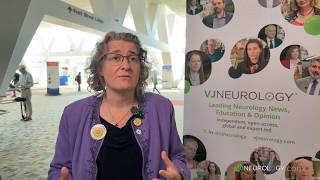
AAN 2025 | Presentation, treatment, and outcomes of acute basilar artery occlusion: a retrospective analysis
Chia-Chun Chiang, MD, Mayo Clinic, Rochester, MN, discusses a retrospective review of the treatment outcomes for 182 patients with acute basilar artery occlusion. The findings revealed that medical treatment was associated with more favorable outcomes on the modified Rankin scale, whereas mechanical thrombectomy was associated with a higher rate of improvement in the National Institutes of Health Stroke Scale (NIHSS) score. This interview took place at the 77th American Academy of Neurology (AAN) Annual Meeting in San Diego, CA.
These works are owned by Magdalen Medical Publishing (MMP) and are protected by copyright laws and treaties around the world. All rights are reserved.
Transcript
So that is a study that I worked with a colleague who did residency at Mayo Clinic, Dr Nikita Chhabra. So together we reviewed, did a retrospective trial review study at Mayo Clinic for patients who had visited all Mayo Clinic sites over the past 13 years with acute basilar artery occlusion. So basilar artery occlusion is a very devastating condition. It means that there’s an acute stroke affecting the main bloodstream of the posterior circulation...
So that is a study that I worked with a colleague who did residency at Mayo Clinic, Dr Nikita Chhabra. So together we reviewed, did a retrospective trial review study at Mayo Clinic for patients who had visited all Mayo Clinic sites over the past 13 years with acute basilar artery occlusion. So basilar artery occlusion is a very devastating condition. It means that there’s an acute stroke affecting the main bloodstream of the posterior circulation. A lot of times, the mortality rate is extremely high, and if the patient has a deficit from it, which the patient usually does, which is typically very severe and debilitating. So it’s very important to identify what is the best treatment strategy for these patients. Previously, a lot of these studies that we used, which we based on several years ago, were mainly based on acute stroke that occurs in the anterior circulation, but up until recently, there were not that many studies focusing on posterior circulation stroke. So that was the reason that we wanted to start this research project several years ago to retrospectively review all patients who presented with acute basilar artery occlusion and to identify the treatment outcomes and to see what treatment strategies would work best for these patients. So we identified in our final analysis, we ultimately included 182 patients who presented to Mayo Clinic sites with acute basilar artery occlusion. We separated patients based on the treatment they received: medical treatment, meaning patients who received standard medical treatment, including IV thrombolysis, like IV tPA or IV tenecteplase, and also patients who received mechanical thrombectomy. And then we compared the results of these patients. We found that, as we expected, the mortality rate overall among these patients was really high, but about half of the patients received mechanical thrombectomy and half of the patients received medical therapy in our population. We found that overall the outcome in terms of favorable outcome, defined as patients who have a modified Rankin score of 0 to 2, that is a favorable outcome upon discharge. So we identified that patients who received medical therapy actually had a more favorable outcome after we adjusted for NIHSS and other comorbidities. However, those who received mechanical thrombectomy actually had a much higher rate of having significant improvement of their NIH-SS score, higher than 5 or 10. So I think how we interpreted this study result is that since this is a retrospective analysis, and then we also saw that based on our study, patients who received mechanical thrombectomy had a higher NIHSS to start with and had a longer kind of time window from the time of onset to presentation. So probably it’s a group of patients that have more devastating deficits to start with. So I think it’s not surprising for us to see that patients who receive mechanical therapy have a more favorable outcome. However, we do demonstrate based on our study result that patients who receive endovascular therapy actually have a higher rate of improvement of their NIHSS from presentation to discharge for both more than a five-point improvement of NIHSS and more than a 10-point improvement of NIHSS. So I think our study, although it was based on retrospective analysis, we did demonstrate that a particular group of patients who might benefit from mechanical thrombectomy as shown by the improvement in NIHSS score.
This transcript is AI-generated. While we strive for accuracy, please verify this copy with the video.
Read more...

Disclosures
Consultant: Satsuma, eNeura, Pfizer.