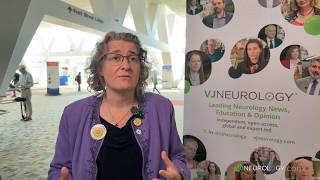
WSC 2025 | Disparities in treatment access for stroke in Brazil
Eva Rocha, MD, PhD, Universidade Federal de São Paulo, São Paulo, Brazil, discusses the disparities in access to stroke treatments in Brazil, highlighting the differences between the public and private health systems, as well as the rural-urban divide. Dr Rocha notes that while the RESILIENT trial (NCT02216643) demonstrated the feasibility of thrombectomy in the public health system, implementation remains a challenge. This interview took place at the 17th World Stroke Congress (WSC) in Barcelona, Spain.
These works are owned by Magdalen Medical Publishing (MMP) and are protected by copyright laws and treaties around the world. All rights are reserved.
Transcript
One of the main barriers is the big disparities that we have in our countries. So in Brazil, for example, we have a public health system and a private health system. In the public health system, there’s a problem with getting access to all stroke treatments, such as even thrombectomy, thrombolysis. While in the private health system, we have usually access to many different treatments, but it’s also very expensive...
One of the main barriers is the big disparities that we have in our countries. So in Brazil, for example, we have a public health system and a private health system. In the public health system, there’s a problem with getting access to all stroke treatments, such as even thrombectomy, thrombolysis. While in the private health system, we have usually access to many different treatments, but it’s also very expensive. And there’s another big challenge, that’s the rural-urban divide. So we have a very big country with great disparities. So the treatment in big centers is very different from treatment in more far places, further places. So that’s a big challenge as well. In Brazil, we had the RESILIENT trial that showed that we can do thrombectomy in the public health system in a low- and middle-income country and that was very important to talk to the government and make them implement stroke thrombectomy also in the public health system but there are still many problems with implementing it.
This transcript is AI-generated. While we strive for accuracy, please verify this copy with the video.
Read more...