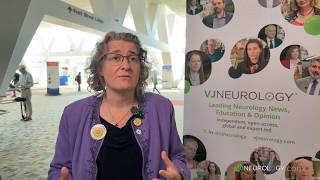
WSC 2025 | Sex and gender differences in lifestyle interventions for stroke prevention
Emine Kocabas, MPH, University Health Network, Toronto, Canada, discusses the findings from a realist review on the key sex and gender differences in lifestyle interventions for stroke and vascular cognitive impairment prevention. Ms Kocabas notes that women and men have different lived realities and experiences, and that interventions tailored to these differences can be more effective, particularly when accounting for context, mechanisms, and outcomes. This interview took place at the 17th World Stroke Congress (WSC) in Barcelona, Spain.
These works are owned by Magdalen Medical Publishing (MMP) and are protected by copyright laws and treaties around the world. All rights are reserved.
Transcript
So we did a realist review on stroke and vascular problem impairment and lifestyle interventions. We synthesized 193 studies. So a realist review is different than a traditional systematic review and meta-analysis. Traditional systematic reviews and meta-analysis are more generic and they look at averages versus a realist review is more context-driven. It looks at the context, mechanisms, and outcomes of different interventions, and so we had a massive librarian search that yielded over 34,000 results, from that we extracted 193, and we looked at sex and gender differences, that was one of our main themes...
So we did a realist review on stroke and vascular problem impairment and lifestyle interventions. We synthesized 193 studies. So a realist review is different than a traditional systematic review and meta-analysis. Traditional systematic reviews and meta-analysis are more generic and they look at averages versus a realist review is more context-driven. It looks at the context, mechanisms, and outcomes of different interventions, and so we had a massive librarian search that yielded over 34,000 results, from that we extracted 193, and we looked at sex and gender differences, that was one of our main themes. So sex and biological roles are very different in the way they are applied into interventions. Women receive information much more differently than men and they have much more different lived realities and experiences versus men. We had some studies that expressed how women who have experienced a stroke are treated much differently in the healthcare system. At the J.N. Sari Sunshine Centre, a lot of work is done with women and our patient partners, and a lot of them mention that they don’t feel heard or seen as a woman in the healthcare system. They explain that post-stroke, they go through complete life changes. They don’t feel like the same mother as before. They experience much different realities. And so interventions that look at women and actually address their real lived realities do a lot better than traditional generic interventions. Understanding these differences can really help interventions and programs work a lot more effectively. Women who, for example, have children or parents or grandparents that they need to take care of usually put them first. A lot of women put others first before themselves and they don’t really take care of themselves and they tend to neglect their own self-care. So men approach interventions much more differently than women do. There was one study that we found that looked at men and their eating norms. The intervention let them know that they need to be eating better, doing better grocery shopping, but didn’t account for the fact that the men that they were addressing did not do the grocery shopping. They did not even go into the grocery store. They didn’t do any of the cooking. It was the woman. Accounting for these contexts and the different mechanisms that go into the lived realities can really help shape interventions much more effectively than traditional interventions. So it’s also important to tailor interventions to women and men differently at their different life stages. So for example, women go through menopause and perimenopause, and at those stages, they have very different hormonal realities, different experiences that they’re going through. And so tailoring interventions can help them be more equitable, responsive, and inclusive. So you also want to help design with context in mind and look at the different contexts where people are coming from. So clinicians and policymakers can really look at the people that they’re addressing, where they come from, their experiences, and their backgrounds, and help tailor the interventions to those people. Another finding from our research is that integrating material supports really does help interventions become more accessible. So for example, interventions that provided at-home blood pressure monitors or at-home take-home booklets or audiobooks, or interventions that they can access remotely on their own time and flexible schedules, work a lot better and deliver greater impacts, greater sustainability, greater actionability. So there are definitely still some representation gaps. When typical studies look at sex and gender, they don’t really account for the two as separate things. They need to account more for sex and gender-based analysis and consider the context of the people that they’re looking at and go a little bit deeper into what they need to do. There’s a lot of representation gaps, so women are treated much more differently than men in the healthcare system, and that needs to be accounted for, a lot of studies and a lot of research is focused more on men and has been based on men in the past, women need to be more accounted for, so future interventions can look at more design representation and translation for different populations to really help things become more effective, implementable, and actionable and equal for all.
This transcript is AI-generated. While we strive for accuracy, please verify this copy with the video.
Read more...