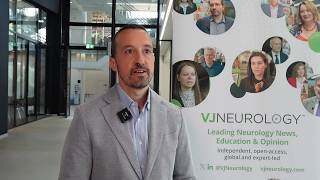
WSC 2025 | Strategies to reduce modifiable risks in younger populations to reverse the rising stroke incidence
Negar Asdaghi, MD, University of Miami, Miami, FL, comments on strategies to reduce modifiable risks in younger populations to help reverse the trend of a rising stroke incidence. Dr Asdaghi highlights the importance of a healthy diet, regular exercise, and decreasing the use of electronic devices. This interview took place at the 17th World Stroke Congress (WSC) in Barcelona, Spain.
These works are owned by Magdalen Medical Publishing (MMP) and are protected by copyright laws and treaties around the world. All rights are reserved.
Transcript
Yeah, so it’s basically, it requires a village to really, number one, raise awareness about this rise in vascular risk factors. And that starts with our diet and our lifestyle. I think those are, if we were to start somewhere important, is looking at our diet, looking at what we’re feeding our children, and what young adults consume, sort of the fast industrial way of living, unfortunately, demands less and less time that we sit and prepare meals, and more and more using fast food options and options that perhaps are not the healthiest just to keep things on the run...
Yeah, so it’s basically, it requires a village to really, number one, raise awareness about this rise in vascular risk factors. And that starts with our diet and our lifestyle. I think those are, if we were to start somewhere important, is looking at our diet, looking at what we’re feeding our children, and what young adults consume, sort of the fast industrial way of living, unfortunately, demands less and less time that we sit and prepare meals, and more and more using fast food options and options that perhaps are not the healthiest just to keep things on the run. And that has an impact definitely on development of traditional risk factors. There is a nice study that was completed in China, and that looked at a sort of analysis of the impact of the Western diet, which basically is characterized by high intake of prepackaged food and refined grains and red meat and processed food in the Eastern population, from the Asian population, and looking at the frequency of times where a person takes fast food and basically the development of diabetes and mortality related to cardiovascular disease. And that’s really a nice direct correlation between the two. So regardless of genetics and regardless of background, what we eat impacts our health and that seems to be really sort of directly related to the development of certain important vascular risk factors, diabetes, and high blood pressure. Number two is really the rising pandemic of electronic devices. Our young adults wake up; the first thing they do is look at their cell phone and look at their social media. And the average time a young person from their teenage years all the way to their adulthood is spent on screens is more and more increasing. And the projected trajectory is just sort of very worrisome. And so that constant feed of being on screens really impacts the brain in sort of unusual ways and dangerous ways. A sedentary lifestyle, decreasing the sort of duration of exercise and activity during the day, and lack of hydration, increasing the intake of pop and other sorts of soda and other unhealthy refined sugars are all things that simple steps that we all can take to make ourselves healthier every single day. Weight management is a really, really important issue here. Many of these vascular risk factors are directly correlated with abnormal weight or not being an ideal weight for the body. The human body is not meant to be overweight. And all of these factors increase the risk of development of metabolic syndrome. Many studies have shown that metabolic syndrome, so the weight that we put around the abdomen area is not just aesthetically unpleasing, but also keeps the body at a metabolic or inflammatory rate where insulin resistance occurs, where blood pressure control becomes almost impossible. And the risk of stroke and heart disease increases irrespective of the treatment for those risk factors. So the rate of diabetes and high blood pressure increases and dyslipidemia. And even if we control those risk factors to the best of our abilities, meaning if we bring the blood pressure down with medicine, if we control the diabetes, and if we give anti-cholesterol medicine to bring those risk factors at a reasonable rate, still the presence of metabolic syndrome carries an independent risk for development of stroke and heart attack. And those are things that every single person needs to be aware of. The rise in childhood obesity is an important pandemic that’s not just impacting one country; it’s a global pandemic and more people should be aware of that. And it’s an important target to attack.
This transcript is AI-generated. While we strive for accuracy, please verify this copy with the video.
Read more...