ISC 2025 | Contemporary trends in treatment and outcomes of AIS: an analysis of the Florida Stroke Registry
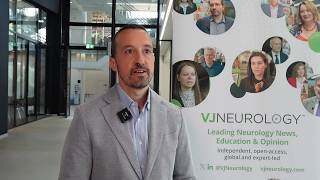
Negar Asdaghi, MD, FRCPC, Miller School of Medicine, Miami, FL, comments on the contemporary trends and characteristics of treatment and outcomes for patients with acute ischemic stroke (AIS) based on data in the Florida Stroke Registry. Dr Asdaghi reports trends in the use of reperfusion therapies, defect-free care, and in-hospital mortality over the past 12 years. This interview took place at the 2025 International Stroke Conference (ISC), held in Los Angeles, CA.
These works are owned by Magdalen Medical Publishing (MMP) and are protected by copyright laws and treaties around the world. All rights are reserved.
Transcript
At this International Stroke Conference, we had an opportunity to present a paper from the large Florida Stroke Registry. Very briefly, Florida Stroke Registry is an ongoing stroke registry that has been sort of functioning for over a decade now across multiple centers in the state of Florida and is a quality improvement registry that basically looks at how the practice of stroke is conforming to guidelines, recommended therapies, and it’s been a wealth of information for a number of initiatives across the state of Florida...
At this International Stroke Conference, we had an opportunity to present a paper from the large Florida Stroke Registry. Very briefly, Florida Stroke Registry is an ongoing stroke registry that has been sort of functioning for over a decade now across multiple centers in the state of Florida and is a quality improvement registry that basically looks at how the practice of stroke is conforming to guidelines, recommended therapies, and it’s been a wealth of information for a number of initiatives across the state of Florida. So here we looked at contemporary trends and characteristics in treatment as well as contemporary trends in in-hospital mortality across the state of Florida over the past 12 years since the registry has been ongoing. And of course, we have large data so we can say a lot about how the trends of things have been across this past 12 years. So we had a study population was inclusive of patients in whom we had in-hospital mortality data. So we have over 300,000, 311,471 patients with acute ischemic stroke. And one of the things we like to do is, unlike many of the studies in this space where certain forms of ischemic stroke patients are usually included. For instance, those who present under certain hours from symptom onset or certain characteristics, either mild or moderate or severe, or with certain types of ischemic stroke. We were inclusive of anyone who presented, regardless of the time of onset, regardless of those characteristics that I mentioned, and sort of look at the big picture of how the state of stroke is in this registry. So the median age of participants or patients that were enrolled in the registry overall was 70. But when we looked at from 2012 to end of 2023 in the study, we saw a gradual decline in age of participants with the final diagnosis of acute ischemic stroke. So that was the first finding of our paper. Next finding was the neurological presentation as captured by NIH stroke scale. We know from other studies, large either registry-based studies or population-based studies, that majority of patients with acute ischemic stroke actually have mild neurological presentations captured by NIH stroke scale. And here we found the same thing. The median NIH stroke scale was four. Obviously, the interquartile range was pretty wide. But over the study period, so over the past decade, the median presenting NIH stroke scale also dropped from a median of four to three, which is an important drop that we noted. And that’s not to say that strokes are getting less severe. That’s to say that with our public awareness campaigns and increased awareness regarding stroke symptoms, that more and more people are presented to hospital with a stroke-like presentation, however mild and being captured correctly into our stroke registries, including the Florida Stroke Registry. So it’s an important finding observation from the study. Now the next order of business is what percentage of patients in the registry undergo reperfusion therapies? And we know now as we stand today in 2025, we have two forms of acute reperfusion therapies. Either we have intravenous thrombolysis or mechanical thrombectomy. And so when we looked at in whole, and of course there are a lot of restrictive eligibility criteria for these reperfusion therapies, but overall again, big picture when we looked at anyone with the final diagnosis of acute ischemic stroke, included in the Florida Stroke Registry, we saw that 15.3% overall received reperfusion therapies, 11%, just over 11% received intravenous thrombolysis, 5% received endovascular thrombectomy, and just close to 2% received both therapies. So this is very important as we look at our big picture and highlighting that the majority of patients with a diagnosis of acute ischemic stroke for one reason or another, I always say whether they present too late, they’re too mild, or their occlusion sites are too distal, or the established stroke is too large, that’s sort of large ischemic core, they are for one reason or another not eligible to receive acute reperfusion therapies, which is very important as we look at more and more acute therapies that we can offer these patients outside of reperfusion treatments. And again, an important finding from this work. Now, of course, in keeping with the improvements and enhancement of indications for reperfusion therapies, very importantly, over the past decade with so many more trials to increase and enhance indications for use of thrombectomy, we did see an incline in use of reperfusion therapies over the study period. Overall, it went from 9% for all comers to 17%. So as I said, when we looked at data as a whole, the number was 15%, but that ranged from 9% back in 2012 to upwards of 17% in 2023. Now, another important metric that is captured as part of the, again, with the guidelines, quality improvement metrics is this entity of defect-free care. Now, defect-free care, the definition has evolved over time, but essentially looks at the percentage of stroke patients, in this case acute ischemic stroke patients, who were eligible for seven important metrics. That’s whether or not they received IV thrombolysis if they presented within a certain time frame and, of course, had no other contraindications for receipt of this therapy. Whether they received DVT prophylaxis, whether they received antithrombotics, either antiplatelet or anticoagulants, whether they received statin therapy. Again, all of this is the denominator or the patients that were eligible to receive those therapies. And a conglomerate of those metrics create this defect-free care. And it’s an important metric because essentially each and every stroke patient needs to receive defect-free care. And of course, across the state, when we look at all these years, we see that only 68.4% of patients with acute ischemic stroke receive defect-free care. Now, we’ve published on this in different papers, looking at the details of what exact metric was the sort of most common fallout metric. But very reassuringly, we see that the percentage of patients who received defect-free care over the study period went from 18% to 83%. Again, an emphasis that participations in quality improvement programs, whether the guidelines quality improvement programs here in the United States or anywhere else across the globe, actually improves adherence with guidelines recommended therapies. And that’s an important graph that the study showed. Now, finally, we were interested in looking at in-hospital mortality. Much had happened in this space in the world of stroke over the past decade. From acute reperfusion therapies, which I alluded to earlier, to improvement in secondary preventive measures, and of course, enhancing recognition of stroke in general. So we were interested to see whether over the past decade, we’ll see a dip in hospital mortality. And for sure, we saw that. So the overall in hospital mortality, all comers was 3.2%. It declined from just upwards of 4% down to 2.4%. So a nice decline in mortality we saw over the past decade across all of the participants and patients that were included in the registry. But importantly, that was at the expense of increase in severe disability as captured by either a modified rankin scale of three to five or patients that were discharged to hospice. And this is accounting for all differences, accounting for decline in age, and the night stroke scale and other relevant characteristics that we adjusted for. So again, this was an important finding and in keeping with what’s published across the globe on this issue of age and in-hospital mortality. Other people from different countries have published and presented very similar data that over the years, we’re seeing an ever so slight decline in age of patients who present with acute ischemic stroke. We do see a small decline in mortality when we look at large data, but that is at expense of incline or increase in worsening functional outcomes or, for instance, discharge to hospice. And that’s a really important reminder that stroke is truly a deadly disease. And it is a number one neurological cause of adult disability across the globe. And we shouldn’t put our guards down when we see this drop in mortality. And so basically we see that drop in mortality at the expense of an increase in the modified rankings of four or five at the time of discharge from hospital again a reminder that stroke is a very very disability producing condition and our efforts to find a treatment, aggressive treatment, for this condition should not stop obviously at just providing reperfusion therapies to these patients. A majority of these patients do not receive reperfusion therapies for one reason or another, most commonly being the fact that they’re not eligible for these therapies and our continued efforts regarding aggressive, acute and secondary preventive measures should continue.
This transcript is AI-generated. While we strive for accuracy, please verify this copy with the video.
Read more...

Disclosures
Consultant: American Heart Association – Active (exists now).