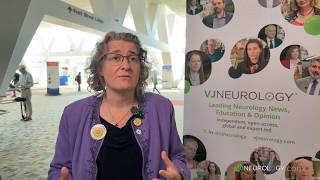
WSC 2025 | Optimal aspirin dose for high-risk TIA and minor stroke in patients on dual antiplatelet therapy
Adnan Qureshi, MD, The University of Missouri School of Medicine, Columbia, MO, comments on the optimal dose of aspirin in patients with high-risk transient ischemic attack (TIA) or minor ischemic stroke who are started on aspirin and clopidogrel. He discusses findings from the POINT study (NCT00991029), which suggest that a lower dose of aspirin is associated with a lower risk of ischemic stroke and myocardial infarction, without an increased risk of intracerebral hemorrhage. This interview took place at the 17th World Stroke Congress (WSC) in Barcelona, Spain.
These works are owned by Magdalen Medical Publishing (MMP) and are protected by copyright laws and treaties around the world. All rights are reserved.
Transcript
Since two trials demonstrated that if you take patients who have what we call patients with high-risk transient ischemic attacks and then patients with minor ischemic strokes and actually start them on aspirin and clopidogrel, which is an antiplatelet agent, they have a lower risk of having another ischemic stroke in the next three months, as opposed to just starting them on aspirin alone. And I think that that brings the fact that it’s been known that, you know, patients with transient ischemic attack or minor ischemic stroke have a high risk of having another ischemic stroke in the next 90 days...
Since two trials demonstrated that if you take patients who have what we call patients with high-risk transient ischemic attacks and then patients with minor ischemic strokes and actually start them on aspirin and clopidogrel, which is an antiplatelet agent, they have a lower risk of having another ischemic stroke in the next three months, as opposed to just starting them on aspirin alone. And I think that that brings the fact that it’s been known that, you know, patients with transient ischemic attack or minor ischemic stroke have a high risk of having another ischemic stroke in the next 90 days. And what is the best way to actually reduce that risk? And it appears that based on the existing research, if you actually start them on aspirin and clopidogrel rather than just aspirin alone, you have a greater benefit in preventing an ischemic stroke, another ischemic stroke. So then the question actually becomes that what should be the right dose of aspirin in patients who are actually going to be put on aspirin and clopidogrel? And the question has pertinence. So 30% of all patients that are admitted in the United States with an ischemic stroke are being discharged on both aspirin and clopidogrel. So almost a third of the patients will be placed on two antiplatelet medications. So the dose of clopidogrel is fixed. So it’s 75 milligrams a day. But the dose of aspirin can vary. So you have a dose that can be as low as 81 milligrams or 75 milligrams a day to as high as 345 milligrams a day. So the question is that once you’re on clopidogrel, what should be the right dose of aspirin? And does it even matter? So, you know, does it really matter that you should be on a higher dose or a lower dose? So that is the question that we tried to address. So in the POINT study, which actually was a study that looked at these patients, they allowed any dose of aspirin when you’re actually randomized to the group that actually is going to be placed on aspirin and clopidogrel. So we had a range of doses of aspirin. So that allows us to analyze that is there a better dose of aspirin than actually, you know, when you’re using it in combination with clopidogrel. So what we did was we actually divided these patients. So we said, okay, there’s going to be a group of patients who are going to be on clopidogrel and less than 100 milligrams a day of aspirin. And there’s going to be a group of patients who are going to be on clopidogrel and more than 100 milligrams per day of aspirin. And, you know, as we follow these patients, you know, what is the risk of actually having another stroke, another ischemic stroke, but actually a combination of ischemic stroke or myocardial infarction, and does the dose of aspirin matter? So what we found was that in patients who were on less than 100 milligrams per day of aspirin had a lower risk of having an ischemic stroke as compared to those who are on a higher dose of aspirin, so more than 100 milligrams per day. And again, if you combine these two, just not ischemic stroke, but actually ischemic stroke and myocardial infarction together, then essentially that’s the same benefit that you see. So what it does is it actually gives us, for the first time, an in-depth analysis of when you’re starting these patients with aspirin and clopidogrel, what dose of aspirin should you consider? And it seemed like the best benefit is actually to consider a lower dose of aspirin, which is less than 100 mg per day. So I think that, again, there are certain limitations here. I think that, you know, obviously this was not the primary aim of the study. So, you know, the number of people that actually were on different doses of aspirin is smaller. But despite the smaller number of patients, you can still actually see a statistically significant difference between the two groups. And I think that, you know, the American Heart Association, American Stroke Association already favor a lower dose of aspirin when you’re using clopidogrel. And I think this provides a stronger level of support for that recommendation. So I think that there is some practice implication. So in a scenario where multiple doses of aspirin are used in general practice, it actually provides an evidence base or evidence that we should be using a lower dose of aspirin. Now, interestingly, the dose of aspirin didn’t really change the risk of intracerebral hemorrhage. So that was actually interesting that it wasn’t necessarily the hemorrhagic complications, but simply a lower risk of ischemic stroke when you’re using a lower dose of aspirin. So that was a little unexpected. We thought that, you know, if there is a benefit, it’s probably going to be driven by a higher risk of bleeding complications than those who actually are on a higher dose of aspirin. So that’s actually the analysis and the conclusions. And I think we adjusted for all the other potential variables that could actually predict a different risk of ischemic stroke in these patients. So despite adjusting for everything, it seemed like the lower dose of aspirin was beneficial and essentially maybe the preferred choice with the level of evidence that we can provide.
This transcript is AI-generated. While we strive for accuracy, please verify this copy with the video.
Read more...

Disclosures
Co-founder of Qureshi Medical, DyQure, QuRevasc, and QureMed. Received grant support from Chiesi USA.