WSC 2025 | Evidence for the use of CEP devices to prevent breakthrough strokes
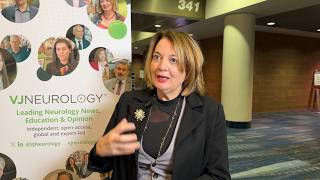
Valeria Caso, MD, PhD, FESO, Santa Maria Della Misericordia Hospital, University of Perugia, Perugia, Italy, shares evidence for the use of cerebral embolic protection (CEP) devices to prevent breakthrough strokes. Prof. Caso highlights trial evidence, including the CAPTURE (NCT04995757) and ELAPSE (NCT05976685) trials, and highlights that these devices are used in carefully selected patient populations. This interview took place at the 17th World Stroke Congress (WSC) in Barcelona, Spain.
These works are owned by Magdalen Medical Publishing (MMP) and are protected by copyright laws and treaties around the world. All rights are reserved.
Transcript
Regarding the devices, we have very little evidence. We have a safety CAPTURE trial that we can do it. To put the bilateral carotid filter, we have some evidence about this, but we will wait for the trial. Same for the left atrial appendage occlusion. We have two trials, the ELAPSE trial and the LAAOS-4 trial. So again, we have evidence from the field, from the ground, from the real-world studies, that there is a good, it’s the right way to go, but there is no randomized trial evidence until now...
Regarding the devices, we have very little evidence. We have a safety CAPTURE trial that we can do it. To put the bilateral carotid filter, we have some evidence about this, but we will wait for the trial. Same for the left atrial appendage occlusion. We have two trials, the ELAPSE trial and the LAAOS-4 trial. So again, we have evidence from the field, from the ground, from the real-world studies, that there is a good, it’s the right way to go, but there is no randomized trial evidence until now. Currently, there are no arguments, especially with left atrial appendage occlusion, because this is already in, we use it for other patients so now we discuss with our cardiologist for example if we deem that our patient needs something on top of, we do it, so we are carefully selecting the patients because if there is a breakthrough stroke I have to give an option, I know there are some data from observational studies and I have to offer something because, as I said, another stroke is a defeat. So we have to do the best not to get another stroke for our patients.
This transcript is AI-generated. While we strive for accuracy, please verify this copy with the video.
Read more...