WSC 2025 | Does screening for atrial fibrillation reduce the burden of recurrent ischemic stroke?
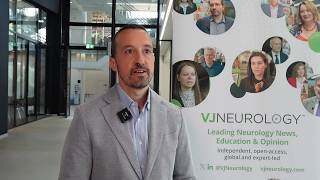
Rolf Wachter, MD, PhD, University Hospital Leipzig, Leipzig, Germany, comments on the importance of screening for atrial fibrillation to prevent recurrent ischemic strokes, highlighting that while screening can detect more cases, it is unclear if treating screen-detected atrial fibrillation can prevent strokes. Prof. Wachter discusses the ongoing Find-AF2 trial (NCT04371055), which aims to answer this question by monitoring heart rhythm in over 5,000 stroke patients and comparing outcomes with usual care. This interview took place at the 17th World Stroke Congress (WSC) in Barcelona, Spain.
These works are owned by Magdalen Medical Publishing (MMP) and are protected by copyright laws and treaties around the world. All rights are reserved.
Transcript
In my very personal opinion, the missing link is, we do a lot of screening for atrial fibrillation and we think that patients with premature atrial beats, supraventricular extrasystoles have an increased risk of atrial fibrillation and we should screen them more. But the open question in screening is, if we screen more for atrial fibrillation, we definitely know we will find more atrial fibrillation...
In my very personal opinion, the missing link is, we do a lot of screening for atrial fibrillation and we think that patients with premature atrial beats, supraventricular extrasystoles have an increased risk of atrial fibrillation and we should screen them more. But the open question in screening is, if we screen more for atrial fibrillation, we definitely know we will find more atrial fibrillation. The open question is, if we treat atrial fibrillation that is screen-detected, do we prevent recurrent ischemic strokes? That is the open question. I lead a large trial in Germany with more than 5,000 stroke patients. That’s the Find-AF2 trial, where we exactly aim to answer that question. So half of these 5,200 patients get heart rhythm monitoring with seven-day Holter ECGs at randomization after three months, after 12 months, every 12 months thereafter. Or even if they have atrial premature beats in a certain amount, they get an implantable loop recorder with a continuous ECG monitoring. And the 2,600 patients in the control arm just get usual care. And we look for recurrent ischemic strokes. The trial is powered for 640 primary endpoint events. We currently have 75% of that. Trial results will be available in two years from now, probably. And that trial can tell us, okay, is it worth screening for atrial fibrillation to reduce the burden of recurrent ischemic stroke? If the answer there is positive, then probably a risk stratification like we have done to do continuous ECG monitoring in patients who have precursors of atrial fibrillation will be answered as well.
This transcript is AI-generated. While we strive for accuracy, please verify this copy with the video.
Read more...