WSC 2025 | Highlights from WSC 2025 beyond trial updates: cardiac imaging, the impact of AI, & more
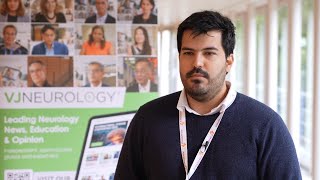
Fabiano Cavalcante, MD, PhD(c), Amsterdam UMC, Amsterdam, Netherlands, shares his highlights from the 2025 World Stroke Congress (WSC). He notes a good balance between acute stroke care and other aspects of care, such as prevention, with a focus on cardiac imaging and the impact of artificial intelligence (AI). This interview took place at the 17th WSC in Barcelona, Spain.
These works are owned by Magdalen Medical Publishing (MMP) and are protected by copyright laws and treaties around the world. All rights are reserved.
Transcript
I think everyone already saw the large clinical trials, have been updated on that, and I’m sure VJNeurology is going to have a very nice coverage of those trials. I’m not going to talk about a specific trial, but what I think was very interesting about this year’s conference was that we had a very good balance between acute stroke care, but also other aspects of care like prevention...
I think everyone already saw the large clinical trials, have been updated on that, and I’m sure VJNeurology is going to have a very nice coverage of those trials. I’m not going to talk about a specific trial, but what I think was very interesting about this year’s conference was that we had a very good balance between acute stroke care, but also other aspects of care like prevention. I think one of the highlights of this year was indeed the role of cardiac imaging, cardiac analysis, and AF and the orders of the cardiac aspect of stroke care. I think that is rather important. Also, the impact of AI and the impact of more advanced imaging analysis, analyzing the thrombi and leading us to more personalized treatment care. I think that is something that is really important. Of course, as I mentioned when we talked about non-inferiority trials, it’s getting harder to find treatments that have a very large treatment effect. And when we are looking at treatments that might have an effect, but they have a small effect, we need much larger sample sizes to be able to demonstrate this efficacy. And sometimes it’s not feasible to do that in a single randomized clinical trial or in a single-center study. And I think another thing that really was interesting about this year was the number of individual participant data meta-analyses. We had the ATLAS collaboration and we have the Catalyst TNK, and it’s very nice to see this collaboration going on between all these brilliant trialists that are doing all these very important randomized clinical trials, but beyond that, they’re combining their data afterwards, like what we did for the Irish collaboration, to be able to provide a more definitive and more conclusive answer, so I’m really happy to see that going on and hope to see more of that in the future.
This transcript is AI-generated. While we strive for accuracy, please verify this copy with the video.
Read more...