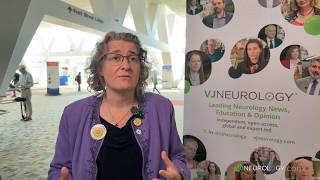
WSC 2025 | The effect of individualized recurrence risk communication on health behaviors in ischemic stroke
Beilei Lin, PhD, Zhengzhou University, Zhengzhou, China, discusses a randomized controlled trial investigating the effects of individualized recurrence risk communication on risk perception and health behaviors in ischemic stroke. Dr Lin highlights that the intervention had a direct effect on certain health behaviors, such as physical activity and diet, and improved recurrence risk awareness. This interview took place at the 17th World Stroke Congress (WSC) in Barcelona, Spain.
These works are owned by Magdalen Medical Publishing (MMP) and are protected by copyright laws and treaties around the world. All rights are reserved.
Transcript
Actually, that study is a randomized controlled trial. Why we do that research is because in the clinical setting, in the hospital, we found that the stroke patients have bad awareness of their recurrence risk. And also, it’s difficult for them to maintain healthy behavior or changes in health behavior. So we searched the literature and wanted to test whether improving the stroke patient’s recurrence risk awareness is effective in promoting them to make changes in health behavior...
Actually, that study is a randomized controlled trial. Why we do that research is because in the clinical setting, in the hospital, we found that the stroke patients have bad awareness of their recurrence risk. And also, it’s difficult for them to maintain healthy behavior or changes in health behavior. So we searched the literature and wanted to test whether improving the stroke patient’s recurrence risk awareness is effective in promoting them to make changes in health behavior. So that’s the background. And then we designed a randomized controlled trial. And first, we developed the intervention program. The name of the intervention is the Individualized Recurrence Risk Communication Program. First, we designed the intervention program by the following five steps. The first step is to identify the intervention target through a cross-sectional study and qualitative study. And then we proposed the research hypothesis. And the third step is we developed the intervention manual. And also, the first step included the Delphi consultation. And several specialists in the fields of physician, neurology, nursing, and rehabilitation were invited to review the manuals and give us feedback. And then we did a pilot study to test whether it’s effective or not on six ischemic stroke patients. Also, we want to try to understand how the patients think about our intervention. And finally, the intervention program was developed. It’s a 12-week intervention and also includes another 12-week follow-up. And then we recruited ischemic stroke patients from four neurological departments in one central hospital in our city and we divided the stroke patients into two groups by the departments, and one is the intervention group and the other one is the control group. After we finished all the intervention, we found that individualized recurrence risk communication did have an effect on health behavior, but only on some parts of the behavior, like physical activity, diabetes, diets, and health responsibility. But it doesn’t affect the patient’s tobacco and alcohol use, and medication adherence and health risk instruction, I think. Also, it helps to improve the patient’s recurrence risk awareness. So then we wanted to test whether our intervention worked on the recurrence risk awareness and then worked on the health behavior, so we did a path analysis to test the hypothesis model and we found that, unfortunately, no indirect effect was found in our study, so it means that the intervention works directly on recurrent risk awareness and health behavior. So those results make us feel confused, whether maybe we give the patients too much information, maybe we just need to talk to them, do it, to let them do exercise or eat healthy. There’s no need to go around and tell them, “”Oh, you need to do that,”” but it’s still difficult to explain because the sample size is not that large, you know, it’s just a single center, so I think it’s very careful to consider or implement the results in practice in the future. Of course, we hope that in the future we can do a larger sample size and multiple centers or a more strict design to test the mechanisms of recurrence risk communication, behavior decision, and health behavior among the ischemic stroke patients. Finally, I’d like to acknowledge our government because this study was supported by the National Natural Science Foundation of the Chinese government. That’s all, thank you.
This transcript is AI-generated. While we strive for accuracy, please verify this copy with the video.
Read more...