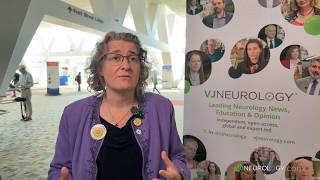
WSC 2025 | Which technique should be used to assess cerebral hemodynamics in ICAD?
Joanna Schaafsma, MD, PhD, University of Toronto, Toronto, Canada, discusses the currently available techniques to assess cerebral hemodynamics in intracranial atherosclerotic disease (ICAD). Prof. Schaafsma advocates for the use of blood oxygen level-dependent (BOLD) fMRI with a vasodilatory stimulus such as CO2, but notes that other methods are also available. This interview took place at the 17th World Stroke Congress (WSC) in Barcelona, Spain.
These works are owned by Magdalen Medical Publishing (MMP) and are protected by copyright laws and treaties around the world. All rights are reserved.
Transcript
Every center has experience in their own ways to measure flow. There are numerous techniques that are too many now to mention. I do acknowledge that the exact diagnostic accuracy is not well known for all of them because of problems of not having a gold standard. Historically, gold standard was water pads. And I spoke about fMRI BOLD using CO2 as a stimulus. That has been compared to water pads by a group in Zurich...
Every center has experience in their own ways to measure flow. There are numerous techniques that are too many now to mention. I do acknowledge that the exact diagnostic accuracy is not well known for all of them because of problems of not having a gold standard. Historically, gold standard was water pads. And I spoke about fMRI BOLD using CO2 as a stimulus. That has been compared to water pads by a group in Zurich. And there is good agreement between those two techniques, and it seems also to be predictive for recurrent stroke. So I want to advocate for bold CVR, so functional MRI using a vasodilatory stimulus such as CO2. There are other ways, such as CT perfusion using acetazolamide and transcranial Doppler using acetazolamide as a vasodilatory stimulus. There is no clear diagnostic accuracy measures on those imaging techniques. And there is on top of it also quantitative MR angiography and certain methods on digital subtraction angiography to measure flow velocity, that are all seemingly reliable and predictive of hemodynamic impairment, but not expressed in measures of diagnostic accuracy in the literature, to my knowledge.
This transcript is AI-generated. While we strive for accuracy, please verify this copy with the video.
Read more...