ESOC 2025 | Global metabolomic profiling reveals a link between tyrosine metabolism and small vessel disease
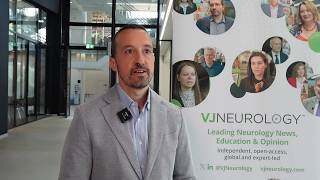
Steffen Tiedt, MD, PhD, Ludwig-Maximilians-University, Munich, Germany, comments on a study using global metabolomic profiling to investigate the underlying biology of small vessel disease. Dr Tiedt highlights a novel finding that tyrosine metabolism is dysregulated in patients with small vessel disease, which may serve as a valuable biomarker for monitoring disease progression and treatment effects. This interview took place at the 11th European Stroke Organisation Conference (ESOC) in Helsinki, Finland.
These works are owned by Magdalen Medical Publishing (MMP) and are protected by copyright laws and treaties around the world. All rights are reserved.
Transcript
Small vessel disease is really a devastating condition and we have very limited knowledge on the underlying pathophysiology. Metabolomic screening or global metabolomic profiling has the potential to inform on the underlying biology by capturing basically all of our metabolites that are circulating in our bloodstream and that are basically an integrative measure of what happens in our body basically from energy metabolism to oxidative stress to vasodilative processes everything might be hidden in when looking at the metabolome at the circulating metabolome...
Small vessel disease is really a devastating condition and we have very limited knowledge on the underlying pathophysiology. Metabolomic screening or global metabolomic profiling has the potential to inform on the underlying biology by capturing basically all of our metabolites that are circulating in our bloodstream and that are basically an integrative measure of what happens in our body basically from energy metabolism to oxidative stress to vasodilative processes everything might be hidden in when looking at the metabolome at the circulating metabolome. We conducted metabolic profiling in several cohorts with different degrees and also different characteristics of small vessel disease progression and identified that particularly tyrosine metabolism so metabolites that in some way contribute also to dopamine and one of the key neurotransmitters in our body that this is dysregulated. This is entirely novel finding that we were able to identify by just looking globally at the metabolome and then narrowing it down to this particular mechanism we found it’s different in patients with small vessel disease compared to healthy controls but it’s also different in different stages of small vessel disease and might be a valuable biomarker to monitor the disease in the future and to also potentially identify treatment effects.
This transcript is AI-generated. While we strive for accuracy, please verify this copy with the video.
Read more...

Disclosures
Consulting fees: Quanterix.