ESOC 2025 | Final results from the StroCare study investigating a post-stroke care program
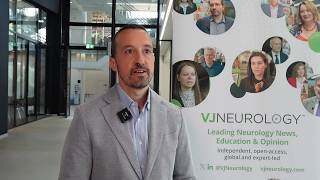
Rafael Bourry, MD, University Medical Center Hamburg-Eppendorf, Hamburg, Germany, discusses findings from the StroCare study (NCT04159324), an interventional study investigating the effectiveness of a post-stroke care program on patient-assessed outcomes. Despite finding no difference in self-assessed quality of life between the intervention and control groups, the study revealed significant improvements in functional outcomes in those who received the intervention. This interview took place at the 11th European Stroke Organisation Conference (ESOC) in Helsinki, Finland.
These works are owned by Magdalen Medical Publishing (MMP) and are protected by copyright laws and treaties around the world. All rights are reserved.
Transcript
We did StroCare which was a post-stroke care program where we tried to improve the self-reported physical health of patients after stroke by providing them with quite an intricate treatment plan that we derived while they were in the acute stroke treatment and then judged based on the patients every six months with a clinical visit, adjusting medication if needed, dependent on quite a lengthy work up of tests that we performed on each of the visits, and then adjusted medication if needed...
We did StroCare which was a post-stroke care program where we tried to improve the self-reported physical health of patients after stroke by providing them with quite an intricate treatment plan that we derived while they were in the acute stroke treatment and then judged based on the patients every six months with a clinical visit, adjusting medication if needed, dependent on quite a lengthy work up of tests that we performed on each of the visits, and then adjusted medication if needed. And we tried assessing primarily if this improved their self-assessed physical quality of life, which it did not in effect. The trial was neutral, but we did find that they had better functional outcomes, so less neurological impairment if you will, and that was a significant finding and the mismatch between the two is something that’s quite interesting to us. So we did a multicentric non-randomized sequentially controlled trial. So we recruited the control group first, which received standard care, which is completely undefined in Germany what that is. And then after recruiting half of the estimated group size that we needed, we switched over to the intervention group and recruited for one and a half years going on from there, the patients to the intervention group. and followed both of those groups up for in total 24 months. And we analyzed group differences at two time points between the groups at 12 months and 24 months with an intention to treat analysis. So where there were missing data points, we performed multiple imputation of the missing data to ensure that there were no systematic biases introduced by missing data because of loss to follow up. The intervention centered on this individually tailored treatment plan that each of the patients received. So we made a plan with the patient while they were in the stroke ward in the acute treatment, targeting all of the different risk factors like blood pressure, blood sugar, cholesterol levels, physical activity, diet, smoking cessation. And then defined treatment goals with them where we wanted to be when we meet up next. And then when patients came back in for the clinical visits every six months, we reassessed. They got a physical examination, they got an EKG, blood test, a neurovascular ultrasound, and then we took all of this information and really took a hard look if we needed to readjust the treatment plan and switch over to a different type of medication maybe or set a more strict goal to really optimize the protection from further cardiovascular events. And then in between the patients received a scheduled phone call from a qualified stroke nurse to ask if they had any new symptoms, any new medication, just to assess for if there was something going on in the meantime and if they needed a more speedy workup done and then additionally to this, there was a case manager implemented who guided patients through the whole journey from the acute treatment over the rehabilitation time into the outpatient post-stroke care. As I said earlier regarding the primary endpoint, which was self-assessed physical health, physical quality of life, physical health, the study was neutral, so what we did find was all of our patients showed impaired scores, so by almost a standard deviation if compared to healthy populations, the physical self-assessed health was reduced, but it was absolutely no difference if you received the intervention or if you were in the control arm, there was no effect, neither at 12 months nor at 24, which was a bit surprising to us, to be honest. And then the secondary outcomes that we assessed were self-assessed psychological health, symptoms of depression and anxiety, stroke recurrence, mortality, all of it was neutral, there was no difference for any of those outcomes between the treatment groups. What we did find was that patients improved in functional outcomes. So the amount of neurological impairment as seen from a physician from outside, not self-rated, was lower in the intervention group. And that was statistically significant after 12 and 24 months.
This transcript is AI-generated. While we strive for accuracy, please verify this copy with the video.
Read more...