ISC 2025 | Unmet needs in the secondary prevention of stroke in patients with atrial fibrillation
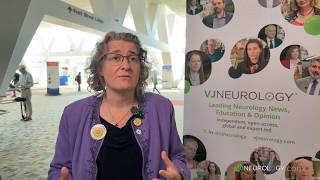
Valeria Caso, MD, PhD, FESO, Santa Maria della Misericordia Hospital, University of Perugia, Perugia, Italy, discusses the challenges and unmet needs in the secondary prevention of stroke in patients with atrial fibrillation. She speaks about the occurrence of stroke despite anticoagulation, rhythm control after cardioembolic stroke, and the reversal of bleeding due to anticoagulation. Prof. Caso also emphasizes the need to address gender disparities in atrial fibrillation management. This interview took place at the International Stroke Conference (ISC) 2025, in Los Angeles, CA.
These works are owned by Magdalen Medical Publishing (MMP) and are protected by copyright laws and treaties around the world. All rights are reserved.
Transcript
I was part of the European Society of Cardiology guidelines for atrial fibrillation and I led the group of Avoid Stroke. And we discussed a lot about some issues, for example, having a stroke despite anticoagulation. And this is still an open area because what can we do? Let’s say a patient is adherent to treatment, is fit, and he has another stroke. So what can we do in this kind of patient? And probably one of the questions will be answered by the LAAOS IV trial where this patient will be treated on top of anticoagulation with left atrial appendage occlusion...
I was part of the European Society of Cardiology guidelines for atrial fibrillation and I led the group of Avoid Stroke. And we discussed a lot about some issues, for example, having a stroke despite anticoagulation. And this is still an open area because what can we do? Let’s say a patient is adherent to treatment, is fit, and he has another stroke. So what can we do in this kind of patient? And probably one of the questions will be answered by the LAAOS IV trial where this patient will be treated on top of anticoagulation with left atrial appendage occlusion. So this is an unmet need. We still do not have the results of this trial. And there is another trial, also a Swiss trial led by David Seiffge. So hopefully in a short time this question will be answered. Second point, what we discussed is the rhythm control after a cardioembolic stroke. We know now clearly from studies in primary prevention that rhythm control reduces the risk of stroke. But what to do in patients who had a recent stroke? Shall we start early? Shall we start in a delayed way? Because there are some sub-analyses of the EAST trial that show that a patient who had a stroke and underwent rhythm control had a lower risk of having a stroke. So this is a very important question still to answer. The third point is also the reversal of a patient who had bleeding due to anticoagulation because still we have some data on andexanet, still it has to be shown if it really works in the real world because we know from the trials that there is certainly a risk of having an ischemic stroke. So I think these are the main points. And then what we did just for my personal work, we removed the sex as an additional point because it was not really an additional point, you know, to select a patient or to score the risk of a patient with atrial fibrillation. We used the CHA2DS2-VASc score in the past. Now we move to CHA2DS2-VA. It seems that it’s gender unfriendly, but in reality, it’s not true because myself was the one who pushed this more and I’m always working on gender because I want that the woman has the same probability of getting treated as a man because women are still undertreated and in the CHA2DS2-VA the final score was the same for men and women even if they had because you needed three points for the sex point for women and two for men. So in the end, it was the same score and it only creates confusion. Having only one score for the whole population makes everything easy and women need to be treated as men for the prevention of stroke and atrial fibrillation.
This transcript is AI-generated. While we strive for accuracy, please verify this copy with the video.
Read more...