ESOC 2026 | Brain frailty and stroke severity, functional outcomes, and the efficacy of EVT
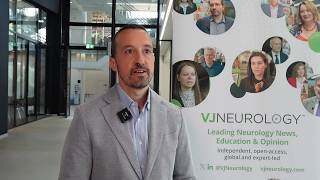
Joachim Fladt, MD, University Hospital Basel, Basel, Switzerland, discusses a pooled analysis of the HERMES collaboration exploring brain frailty and stroke severity, functional outcomes, and the efficacy of endovascular thrombectomy (EVT). Dr Fladt notes that brain frailty provides additional information beyond age and traditional factors, helping to better understand outcome variability and improve risk stratification, but does not support withholding thrombectomy in patients with frail brains. This interview took place at the 12th European Stroke Organisation Conference (ESOC) in Maastricht, The Netherlands.
These works are owned by Magdalen Medical Publishing (MMP) and are protected by copyright laws and treaties around the world. All rights are reserved.
Transcript
This study focuses on the role of brain frailty in patients with large vessel occlusive stroke undergoing thrombectomy. We know that thrombectomy improves outcomes in these patients, but we also know that stroke recovery is highly variable; age, among other factors, has been used to explain this variability; however, age is not a very good surrogate, and prior research suggests that brain frailty may be actually better suited, reflecting a measure of biological brain age...
This study focuses on the role of brain frailty in patients with large vessel occlusive stroke undergoing thrombectomy. We know that thrombectomy improves outcomes in these patients, but we also know that stroke recovery is highly variable; age, among other factors, has been used to explain this variability; however, age is not a very good surrogate, and prior research suggests that brain frailty may be actually better suited, reflecting a measure of biological brain age. So the main question we were asking was, does brain frailty influence the outcomes after thrombectomy? Does it influence the stroke severity at presentation? And does it influence the way people respond to thrombectomy? To address that, we conducted a post hoc analysis of the HERMES dataset from the HERMES collaboration, including patients with available baseline CT imaging. And we assessed several brain frailty markers on non-contrast CT, including white matter disease, cortical and subcortical atrophy, and signs of previous vascular injury. Three important questions: First, the association between brain frailty and 90-day outcome. Second, the association between brain frailty and stroke severity at baseline. And third, whether brain frailty modifies the treatment effect of thrombectomy. In terms of findings, we observed that several brain frailty markers were associated with worse outcomes, particularly cortical atrophy and signs of small vessel disease. In terms of stroke severity at baseline, the associations were not as consistent. There were only some markers showing significant effects. And most importantly, looking at the treatment effect, we observed evidence of heterogeneity, especially for cortical atrophy and lacunes, suggesting that the magnitude of the effect of thrombectomy varies with brain frailty. On the other hand, we did not have clear evidence that the effect or the benefit of thrombectomy is lost in patients with higher levels of brain frailty. Clinically, brain frailty provides some additional information beyond age and traditional factors. It may help us to better understand outcome variability and also improve risk stratification. And at the same time, our results do not suggest or do not support withholding thrombectomy in patients with frail brains. Overall, brain frailty appears to be an important concept linking biological brain age with stroke outcomes and treatment response.
This transcript is AI-generated. While we strive for accuracy, please verify this copy with the video.
Read more...