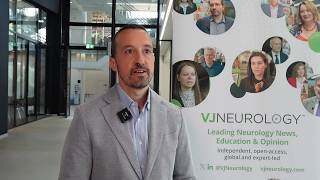
ISC 2026 | Phase III RESPECT-ETB trial of sovateltide for acute ischemic stroke: currently enrolling
Thomas Devlin, MD, PhD, FSVIN, CommonSpirit Memorial Neuroscience Institute, Chattanooga, TN, discusses the Phase III RESPECT-ETB trial (NCT05691244), evaluating the safety and effectiveness of sovateltide in patients with acute ischemic stroke. Dr Devlin highlights the compound’s potential to promote neural recovery and regeneration, and notes that the trial has been fast-tracked by the FDA due to extensive existing data. This interview took place at the 2026 International Stroke Congress (ISC), held in New Orleans, LA.
These works are owned by Magdalen Medical Publishing (MMP) and are protected by copyright laws and treaties around the world. All rights are reserved.
Transcript
Yes, we’re very excited about the RESPECT-ETB trial for a number of reasons, and let me explain this. This is with a novel compound, sovateltide. This is a compound that has been studied extensively outside the United States and already has approval in India. In fact, we have not only a very positive Phase III trial, we now have thousands and thousands of patients that have been studied in a Phase IV study in India as well...
Yes, we’re very excited about the RESPECT-ETB trial for a number of reasons, and let me explain this. This is with a novel compound, sovateltide. This is a compound that has been studied extensively outside the United States and already has approval in India. In fact, we have not only a very positive Phase III trial, we now have thousands and thousands of patients that have been studied in a Phase IV study in India as well. This is a very interesting compound. It is an endothelin-B agonist, and with that, of course, we’ll get vasodilation. But more importantly is on the recovery and regeneration aspects of the compound. This compound leads to significant effect on neuroprogenitor cells, leading to significant neural recovery in the area of ischemia and stroke in patients with significant strokes. So there’s multiple effects of this compound from a biologic and physiological standpoint. I’m not aware of any drug that’s being currently studied in the United States as Phase III that has as much data and has already been approved outside of the United States as this compound. I think it’s for those reasons that FDA designated this trial in its fast-track category to try to get this drug on the market, potentially.
So we have just kicked off and enrolled our first patients in this international trial, RESPECT-ETB. We’re very excited about this. Now, I think the key things are around the inclusion-exclusion criteria. These are patients that can receive IV thrombolysis with the compound. It has an extended window of 24 hours. We are able to enroll patients that have both cortical as well as subcortical strokes. So this is not limited like many of the other trials to just cortical strokes. So the patient population that we could potentially treat is quite large. We’re enrolling patients currently with an NIH stroke scale score of eight up to 19 with a pre-morbid mRS of zero, one or two. So it should be very easy overall, relatively easy to enroll, and we believe the trial is going to move forward very, very quickly. So you have a drug that has a tremendous track record, particularly if you look at the effect of modified Rankin scale scores in the Phase III and Phase IV data coming out of India, this has a very, very dramatic effect in treated patients, shifting them from categories of three, four, five, down to categories zero, one, and two, particularly a very big increase in the ability to actually reach an mRS score of zero. No disability, no symptoms, or very minimal disability of mRS zero, one, or two. So it looks like a highly effective compound. And we’re very, very excited that with the amount of data that we have from India that the FDA has fast-tracked this, and we’ve already enrolled a number of patients in the United States.
This transcript is AI-generated. While we strive for accuracy, please verify this copy with the video.
Read more...