UK Stroke Forum 2025 | Vocational rehabilitation for stroke: insights from a speech and language and occupational therapist
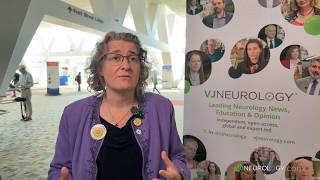
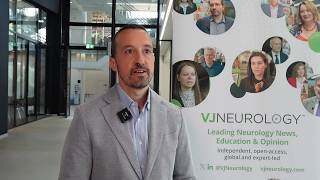
In this discussion, Claire Farrington-Douglas, BSc, MRes, and Leanne Cater, BSc, from Headway East London, London, UK, share insights on vocational rehabilitation for stroke survivors. They discuss the key responsibilities for speech and language and occupational therapists in the return-to-work pathway, highlighting the biggest needs and challenges for stroke survivors. This interview took place at the UK Stroke Forum (UKSF) 2025 Conference in Aberdeen, UK.
These works are owned by Magdalen Medical Publishing (MMP) and are protected by copyright laws and treaties around the world. All rights are reserved.
Transcript
Claire Farrington-Douglas
Hi, we’re at UK Stroke Forum. I’m Claire Farrington-Douglas. I’m the Director of Services and Clinical Lead at Headway East London, soon to be Headway London. And my background is I’m a speech and language therapist and I’ve worked with acquired brain injury for 25 years.
Leanne Cater
So my name’s Leanne Cater. I am an occupational therapist and I also work at Headway East London...
Claire Farrington-Douglas
Hi, we’re at UK Stroke Forum. I’m Claire Farrington-Douglas. I’m the Director of Services and Clinical Lead at Headway East London, soon to be Headway London. And my background is I’m a speech and language therapist and I’ve worked with acquired brain injury for 25 years.
Leanne Cater
So my name’s Leanne Cater. I am an occupational therapist and I also work at Headway East London. I have kind of in previous roles worked throughout kind of the stroke pathway from hyper-acute units all the way through to community rehabilitation. So it’s given a good insight into how the stroke pathway works and how to optimise rehab outcomes for our clients.
Claire Farrington-Douglas
I want to say a little bit about Headway East London. We’re a lovely service based in Haggerston in Hackney and we run a day service and an evening service for people with brain injury to come along to and they can be there long-term post brain injury. At the day service there’s the amazing kitchen where people cook and eat together, there’s the art studio and there’s music and activities throughout the day. We also have a casework service and we have an in-reach service into hospitals called the Better Together Project which is where people from our team with peer workers with experience of brain injury themselves go into the acute ward and meet people very soon after their brain injury to offer support and guidance and signposting. We also have a community support work service where people go and work within people’s homes to support them to be more independent in their everyday lives. And we have a private therapy service which is integrated within the Headway community and we work collaboratively together to work on people’s goals. So myself and Leanne and there’s also psychology, physiotherapy and psychotherapy as part of that team. And our presentation today at the Stroke Forum was all about collaborative working with people with cognitive communication post-stroke and thinking about particularly vocational goals.
I think what can be challenging with cognitive communication is that people can either present with quite impoverished communication, so poor initiation, poor elaboration in conversation, not saying very much at all, to the other extreme where people are quite verbose and tangential and don’t know when to talk and when to listen. Also, CCD can affect your filter, and so socialising can be much more challenging when someone presents with CCD. I think what’s really challenging across the pathway is that some of these difficulties are quite subtle, particularly in a ward-based environment or in a quiet clinical space. And you won’t really see some of these changes until somebody’s back into their life socialising, thinking about work, thinking about relationships. The other thing is that I think that people don’t have very much time for their assessments and these are people that can often talk and they can order their food and they can say what their needs are in terms of the therapy or the rehabilitation they’re having but they might be having quite a big impact on those kind of social communications with family, friends and work colleagues.
Leanne Cater
I think the first thing is understanding an occupational profile. So that’s the kind of the skills of the person and in relation to their job, but also the job demand. So what cognitively do they need to be able to do? What are the specific tasks that they need to complete within their role? And that’s kind of the first step. So looking broadly at their skills, but also their kind of job demands. So I think it’s important to understand what the cognitive and communication challenges are. And a large part of our talk today was actually looking at cognitive fatigue and the impact that has overall on someone’s kind of communication and cognition. It’s important to understand that in relation to their working role, thinking about people returning to work, it’s often a long working day, how do those things kind of impact the person day to day.
Claire Farrington-Douglas
And when we’re thinking about communication in the workplace, it’s not just communication about the actual work task, it’s also social communication, you know, the hello, how was your weekend, some of those aspects of communication you need to think about, and also not forgetting that it’s not all verbal, so communication through written and mediums as well, so managing emails, managing text messaging, whatever the systems are, a lot of people with cognitive communication changes will struggle on the phone, and they might struggle in larger meetings, and there’s quite a few people speaking, and they’ve got to kind of almost take notes or think about what their turn is to interject. One of the things that I’ll often do with people is try and mock up a sort of work scenario. If we can’t get actually into the workplace, actually do something within our rehab setting where they’re, you know, we’re firing off emails, we’re making phone calls, we’re setting up the environment to be a little bit like it is at work, so people have a sense of some of those demands before they then trial being back in the workplace. And if it’s possible to actually get somebody, one of their work colleagues, to be involved in the rehab, we have really good outcomes, because then not only are the scenarios you’re working on much more real-life, but also those work colleagues are getting the kind of education and awareness about brain injury that they need to really understand what’s going on with someone’s communication and better support them with that difficult transition back into work.
Leanne Cater
As soon as someone’s admitted to the stroke unit, we need to understand, actually, from that information gathering, what is their job? What is their role? Is it full-time? Is it part-time? What are the different components in relation to that job? Because it helps us understand, actually, what are the challenges that person’s going to have, and do they need to be referred on to a vocational rehab service? Do they need to go to inpatient rehabilitation to really extend that pathway, considering their job kind of needs. In terms of OT, it’s our role to assess those job demands, assess those specific skills in terms of cognition, physical function, and what are going to be the challenges in relation to work. A large part of kind of OT input, perhaps, is going to come just before that person returns to work. And I think sometimes this can be missed, looking at actually a phased return. So sometimes, if OTs aren’t involved in this process, the employer goes, okay, we’re going to do a two-week return to work, but actually, that’s not long enough to really understand those challenges or the difficulties someone’s going to have in terms of their symptoms. So a key thing is fatigue, actually, if someone’s starting off on half a day, then increasing their hours, actually, over a two-week period, you’re not going to kind of understand what the challenges are, so it’s about how do we set a really clear plan, which is over months, to allow kind of adapting either strategies for that person to manage or giving that additional education to the workplace on how to support them.
Claire Farrington-Douglas
One of the biggest barriers for people in return to work is their communication, and often speech and language therapists aren’t part of some of those very specialist vocational rehab programs. So a key thing I’d say is get your speech therapist involved, and then I think it’s really important to think about all those different aspects of communication for people and giving those opportunities for them to practice in those in a supported way and building up to return to work. I agree that getting started with that, as people want to go back to work as soon as they’ve had their stroke, it is usually one of the key goals, and so we need to start talking about it, even if the actual intervention comes a little bit later in terms of people’s readiness for that sort of rehabilitation.
Leanne Cater
I think people having insight, in terms of the readiness to return to work, is probably one of the biggest barriers, and obviously, that comes probably later on down the line when they’ve kind of had that experience that things are challenging, so it’s about how do we develop and support that insight, and as Claire was saying, looking at kind of these trials of work-based tasks and really exploring what the needs are in terms of that, but I definitely think insight and cognitive fatigue, as I said, is a huge barrier, going from being at home, where the environment is not particularly stimulating, to actually going to perhaps an office, where the light is really bright, you know, all of these environmental factors, really busy environment, lots of people talking to you, multitasking, that’s the real kind of challenge and barrier. So it’s essentially supporting people to understand the fatigue and again, implementing some strategies to manage it, and within the workplace.
Claire Farrington-Douglas
And where we see the best success with return to work is where the employer is supportive, and supportive is a very easy word to use, everyone wants to be supportive, but actually underpinning that is somebody understanding the brain injury, understanding the cognitive communication changes, understanding the impact of fatigue. So the more that the employer understands, the more successful the return to work, and being really mindful where employers change, so sometimes people say, oh, we’re going to get you a job that’s very similar to what you were doing before, but in a, you know, in a more supportive way, or something, but actually, it might then be a whole new team that you’re not familiar with, so making sure those relationships are built well, and that the employers and the colleagues have got the kind of information they need to be able to really support that person back into that environment, without going against what that person really wants, because people will want to be in control of what they share about their brain injury and their experience and their cognitive communication changes, so it’s making sure that we’re really working collaboratively with that person about what they want to share with their colleagues and what they don’t want to share.
This transcript is AI-generated. While we strive for accuracy, please verify this copy with the video.
Read more...