MDS 2025 | The alpha-synuclein seed amplification assay and the need to consider Parkinson’s beyond movement
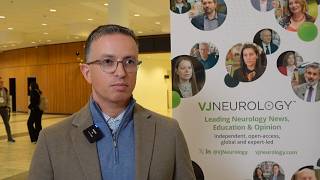
Tiago Outeiro, PhD, University Medical Center Göttingen, Göttingen, Germany, shares updates from a recent publication on Parkinson’s disease, focusing on the alpha-synuclein seed amplification assay and the need to consider the disease beyond the movement component. Prof. Outeiro notes that focusing solely on dopaminergic cell loss may have distracted from other important alterations in the brain, and suggests that alternative strategies may be developed to treat other symptoms. This interview took place at the International Congress of Parkinson’s Disease and Movement Disorders (MDS) in Honolulu, HI.
These works are owned by Magdalen Medical Publishing (MMP) and are protected by copyright laws and treaties around the world. All rights are reserved.
Transcript
So this recent paper I authored was to touch on recent advances, especially related to the use of the alpha-synuclein seed amplification assay as a marker of some pathological alteration taking place in Parkinson’s patients. And in that paper, I mentioned that because we’ve been so focused on the movement component of Parkinson’s disease, which is, of course, perhaps the most important aspect of the disease, at least the one that bothers patients and makes them seek the help of a clinician...
So this recent paper I authored was to touch on recent advances, especially related to the use of the alpha-synuclein seed amplification assay as a marker of some pathological alteration taking place in Parkinson’s patients. And in that paper, I mentioned that because we’ve been so focused on the movement component of Parkinson’s disease, which is, of course, perhaps the most important aspect of the disease, at least the one that bothers patients and makes them seek the help of a clinician. But now we know that the disease is much more than just a movement disorder. And it starts perhaps with alterations in other brain areas. So I argued that perhaps focusing just on the movement component on the dopaminergic cell loss has distracted us from paying attention to other alterations that take place also in the brains of patients, and that we should now consider because perhaps it will be possible to develop other or alternative strategies to treat other symptoms that are also important for the patients. So this is something I discussed. And then also the idea that although the synuclein seed amplification assay is a great tool that we now have, that we never had before, we still need to understand what this assay really tells us. And it will be important to continue to investigate the underlying molecular mechanisms leading to disease.
This transcript is AI-generated. While we strive for accuracy, please verify this copy with the video.
Read more...