EAN 2026 | Which next-generation therapies hold the most promise for advanced Parkinson’s disease?
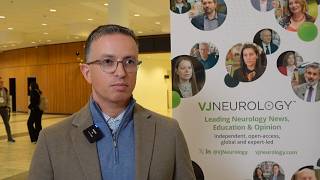
Tiago Outeiro, PhD, University Medical Center Göttingen, Göttingen, Germany, discusses emerging therapeutic strategies for advanced Parkinson’s disease with the potential for disease modification. Prof. Outeiro highlights promising approaches, including targeting oligomeric alpha-synuclein, GLP-1 receptor agonists, and gene therapy. This interview took place at the 12th Congress of the European Academy of Neurology (EAN) in Geneva, Switzerland.
These works are owned by Magdalen Medical Publishing (MMP) and are protected by copyright laws and treaties around the world. All rights are reserved.
Transcript
So we are lucky that we’re living some exciting times when multiple strategies are being tested. Unfortunately, not all of them are working. We know that even recently there were some clinical trials that reported negative results. But there’s hope that maybe we just haven’t been successful because we don’t have the right tools. We are maybe not going in the right patients, not at the right time...
So we are lucky that we’re living some exciting times when multiple strategies are being tested. Unfortunately, not all of them are working. We know that even recently there were some clinical trials that reported negative results. But there’s hope that maybe we just haven’t been successful because we don’t have the right tools. We are maybe not going in the right patients, not at the right time. So all of these need to converge to really increase our chances of success. Now what I see as promising is the strategies that will target alpha-synuclein and here maybe not necessarily the Lewy bodies, the aggregates themselves, but precursor species that I mentioned already earlier, the oligomeric species. So if we have the right antibodies, the right molecules that can target these types of species in the brain, maybe this will be effective. Then we have of course the GLP-1 strategies that are still a bit unclear whether they will work. But maybe we just need to find and again to identify the right population where to test these strategies. Then of course there’s a lot going on also in terms of gene therapy and our ability to intervene in different diseases, even neurological diseases. And there’s hope that as our knowledge advances and as we identify better targets, maybe in the future, gene therapies will also be a possibility in Parkinson’s disease and in movement disorders in general. So I think there’s hope that we’re making progress in terms of our basic understanding of the mechanisms involved in these diseases and as this progresses we’ll of course develop tools to intervene. We have to wait, we have to be patient, but we have to stay optimistic that we will move towards this goal of providing better care for patients with movement disorders.
This transcript is AI-generated. While we strive for accuracy, please verify this copy with the video.
Read more...