EAN 2025 | Predictors of response to treatment with subcutaneous foslevodopa/foscarbidopa infusions in PD
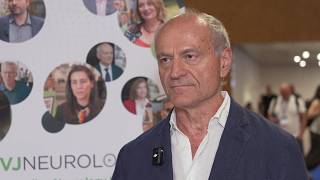
Angelo Antonini, MD, PhD, University of Padua, Padua, Italy, discusses predictors of response to treatment with subcutaneous foslevodopa/foscarbidopa infusions in patients with Parkinson’s disease. Prof. Antonini reports that the amount of “off” time and its functional impact on independence are key predictors of success. He emphasizes that early identification of patients with troublesome “off” periods is crucial, as they may benefit from switching to subcutaneous levodopa delivery. This interview took place at the 11th Congress of the European Academy of Neurology (EAN 2025) in Helsinki, Finland.
These works are owned by Magdalen Medical Publishing (MMP) and are protected by copyright laws and treaties around the world. All rights are reserved.

Disclosures
Coming back to patients who are undergoing the infusion therapies with foslevodopa, foscarbidopa, I think the best predictor is the amount of off time and the functional impact of this off time has on the independence of people with Parkinson’s. We have also learned that patients who perform the best are those who are not too advanced, they haven’t reached yet the late stage of the disease. So these results highlight the need of early identification. So if you have someone who has troublesome off periods during which they are not functionally independent or has problems at night waking up in the morning, this would be a perfect candidate to switch from oral therapy of levodopa to subcutaneous levodopa delivery.
This transcript is AI-generated. While we strive for accuracy, please verify this copy with the video.