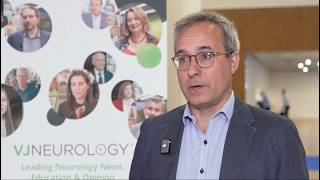
AAN 2026 | Insights into developmental and/or epileptic encephalopathy with spike-and-wave activation in sleep
Nicola Specchio, MD, PhD, Bambino Gesù Children’s Hospital, Rome, Italy, shares insights into developmental and/or epileptic encephalopathy with spike-and-wave activation in sleep. Prof. Specchio notes that the syndrome reflects a failure of normal sleep-dependent neuroplasticity, with abnormal thalamocortical oscillations and widespread functional disconnection across different brain regions, and discusses the potential treatments, including corticosteroids and benzodiazepines. This interview took place at the 78th American Academy of Neurology (AAN) Annual Meeting in Chicago, IL.
These works are owned by Magdalen Medical Publishing (MMP) and are protected by copyright laws and treaties around the world. All rights are reserved.
Transcript
Developmental and epileptic encephalopathy with spike and wave activation in sleep is actually no longer understood as a simple EEG phenomenon and this is definitely conceptualized as a sleep-driven network disorder. This is what we put it in recently in the paper just published on epilepsy. And in this condition, when you have this sleep-driven network disorder, epileptiform activity during non-REM sleep may disrupt the processes of brain development, the fundamental process of brain development...
Developmental and epileptic encephalopathy with spike and wave activation in sleep is actually no longer understood as a simple EEG phenomenon and this is definitely conceptualized as a sleep-driven network disorder. This is what we put it in recently in the paper just published on epilepsy. And in this condition, when you have this sleep-driven network disorder, epileptiform activity during non-REM sleep may disrupt the processes of brain development, the fundamental process of brain development. So the hallmark of this disease is the developmental stagnation or regression. Particularly, it affects the language, cognition, also behavior and attention are affected. And these deficits often emerge in temporal association with sleep-activated epileptiform discharges and it may persist even after seizure control. So what we highlighted in the paper is that from the pathophysiological standpoint, the syndrome reflects a failure of normal sleep-dependent neuroplasticity. Non-REM sleep, it plays a critical role in synaptic homeostasis, in memory consolidation, and in cortical network refinements. In this condition, at the circuit level, there is an abnormal thalamocortical oscillation, which appears to be central. The interaction between excitatory thalamic neurons and inhibitory reticular nucleus generates this pathological spike and wave activity, which may interfere with physiological slow waves and sleep spindles. These are actually key elements for learning and memory consolidation. At a network level, if you look at neuroimaging and EEG and the functional MRI studies, they show that the epileptic activity may induce a widespread functional disconnection with focal hyperactivity and remote inhibition across different connected areas or regions of the brain. So this is a condition highly heterogeneous and half of the patients may have a genetic cause. One of the genes, for example, involved in this condition is the GRIN family genes or other genes that are, let’s say, working on the transcriptional regulators. Also, structural lesions can be involved in this disruption of thalamocortical circuits. Regarding the insights we included on the treatment, the corticosteroids remain definitely the most effective first-line treatment, particularly for improving cognition and behavior. Even if also with steroids relapse are commonly seen. Benzos also are interesting to see how they interfere with this process as far as they may reduce EEG burden, but have a little bit less consistent cognitive benefits. There are some important and interesting new things related to the precision and targeted therapies for some of those conditions. So in summary, this condition, developmental and epileptic encephalopathy with spike and wave activation, is a potentially reversible developmental encephalopathy, which is driven by sleep-related network dysfunction. Early diagnosis is relevant to understand and to develop an etiological stratification of patients as far as targeted interventions are definitely critical to improve long-term outcome.
This transcript is AI-generated. While we strive for accuracy, please verify this copy with the video.
Read more...