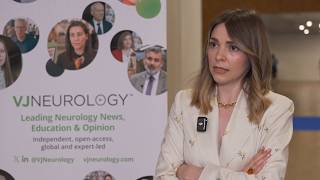
EAN 2026 | A discussion at EAN 2026 on the impact of climate change on neurological diseases
This discussion focuses on the impact of climate change on neurological diseases, including evidence that rising temperatures can worsen neurological conditions, increase the risk of heat-related illness, and affect mental health. The panel also emphasizes the need for greater advocacy, education, and policy action, calling on neurologists worldwide to work together to protect vulnerable patients and address the neurological consequences of environmental change.
Featuring Jacques Reis, MD, PhD, University of Strasbourg, Strasbourg, France, Anne-Marie Landtblom, MD, PhD, Uppsala University, Uppsala, Sweden, Pascale Homeyer, MD, Valence Hospital, Valence, France, Thomas Berger, MD, MSc, FEAN, Medical University of Vienna, Vienna, Austria, David Tanner, Msc ETH, University of Bern, Bern, Switzerland, and Amalia Ghergu, MD, Hospital Center De Sens, Sens, France. This interview took place at the 12th Congress of the European Academy of Neurology (EAN) in Geneva, Switzerland.
These works are owned by Magdalen Medical Publishing (MMP) and are protected by copyright laws and treaties around the world. All rights are reserved.
Transcript
Jacques Reis
Thank you very much to be all close to me. We are here in Geneva for the EAN meeting, and we are very happy to share our main concerns about environmental issues and climate change. Today, we are in the middle of a heat wave here in Geneva, and I think it’s very important to address this issue as a group of neurologists involved at the level of the European Academy, as well as in France and globally through the World Federation of Neurology, where we have a group dedicated to environmental issues...
Jacques Reis
Thank you very much to be all close to me. We are here in Geneva for the EAN meeting, and we are very happy to share our main concerns about environmental issues and climate change. Today, we are in the middle of a heat wave here in Geneva, and I think it’s very important to address this issue as a group of neurologists involved at the level of the European Academy, as well as in France and globally through the World Federation of Neurology, where we have a group dedicated to environmental issues. It’s very important to be here and to attend this meeting. We’ve learned a great deal about the impact of climate change on neurological diseases. And now, my colleague and friend, Anne-Marie Landtblom, is a specialist in multiple sclerosis, and she will give us some insight into the effects of heat on patients with MS.
Anne-Marie Landtblom
Thank you, Jacques. Yes, it’s very nice to be here, seeing that EAN has really highlighted the topic of the environment in many sessions here. I’m worried about the MS patients we care for because they have a well-known heat sensitivity that affects many of their symptoms, especially fatigue, but also pain, paraparesis, vision, et cetera. So increasing temperatures are really a threat to MS patients, in terms of getting more bouts but also having more symptoms during the time when heat is elevated. I had an e-poster here, which is a literature review of a lot of studies, which give very good evidence to this.
Jacques Reis
Yes, thank you very much Anne-Marie. I think it’s important, Pascale, to give you some insight. You are the president of the Club de Neurologie de l’Environnement in France and you told me about one of your patients who died, and the death was related to climate change, in some way, to a heat wave. Can you give us more explanation about what happened to him? Thank you very much.
Pascale Homeyer
This patient stayed outdoors early in the morning to keep his fruits and during all the day to sell them near the road. The third day it was very warm and he tried to refresh, but he went to his home and he died. He was an epileptic patient treated by epitomax, and he died. I think that the treatment is perhaps not inappropriate, but it played a role in what happened to him. Okay. We must remember that higher temperatures are also important for mental health. We know that there is an augmentation of suicides, violence, féminicides with higher temperatures, and the role of the treatment is to be considered because there is a risk of dehydration and interaction between a lot of vulnerable patients and medication.
Jacques Reis
Okay. So as you see we have different types of concern. We have symptoms like fatigue, we have the possibility of very acute and unexpected fatalities related to heat and heat stroke. On the other side, Professor Berger, who’s head of the neurological department in Vienna, will give us more insight about the MS effect in general and also perhaps your perspective on global issues. You see what is important is the vulnerability of patients related to the extreme events. This is very important. So Thomas, please.
Thomas Berger
Yeah, Jacques, thank you very much. I think this is a very prototypic disorder for many conditions, including climate change and air pollution, environmental changes. We as citizens recognize that climate change is a matter. We as neurologists recognize that climate change and environmental change is a matter for our patients. The only ones who do not recognize it are our governments or even our health authorities. However, this has been neglected for various reasons. We all know that. But I think by our advocating voice as neurologists for our patients, it starts getting less neglected by our health authorities.
I give you two examples. One example is that there is in Europe a European court case which has been claimed by two MS patients because they want to make their respective government responsible because they do not act enough against climate change and therefore are responsible for their disease worsening. So there are court cases in the European Court, which means that the governments and the health authorities can’t ignore it anymore because now they have to deal with it. The second thing is that we as neurologists are sometimes blamed as advocates of our patients, that we’re just taking single cases. This case has a worsening of his or her condition. Now if you look at the evidence, and again MS is a good example, if you look at the evidence, it’s not the heat peak days which cause the disease worsening in the patient. We know the heat sensitivity. It is the average temperature rise which causes the worsening for the patient. I think this is something which has nothing to do with the usual climate peaks we experience since the first meteorological analysis. It is a matter of truly the change, and I think this is highly important. Our job as neurologists and the neurological community is of course not only taking care of MS patients. It is patients who are elderly, with neurodegenerative disorders, with metabolic disorders, etc. We need to be the advocate and we have to deliver the evidence for that.
Jacques Reis
Thank you so much. You have pointed, when we prepared this meeting also, to what is very important, and this is education, education of neurologists. I’m very happy to have today with us David Tenner from the University of Bern. David is the technical leader of something very important, the CAS Certificate of Advanced Studies about brain health, and I think you have many things to tell us about your students, about the project you are running under the role of the EAN and the University of Bern in general. So David, please tell us your experience about this. Thank you.
David Tanner
Thank you very much, Jacques. So I’m here from the University of Bern as the Director of Studies of the CAS in Brain Health, and a healthy environment is important for a healthy brain. This is why environmental impacts are very well covered in our newly developed online and international study programs. We cover different aspects of pollution, but of course also the climate crisis and the impact on the brain and neurological disorders.
Jacques Reis
Great. I think it’s very important. I’m also pleased to introduce Amelia. Amelia is head of the neurological department in the town in France, south of Paris, called Sens. I think it’s very important to have your point of view because you are a first student of the CAS in Bern and you are, may I say, the younger generation. Your input into what health and environment is very important because you will face what we have. The future is here. As Amelia told me today, the future is now. But please, what should we do? What can we do? It would be very important to have your input. Thank you.
Amalia Ghergu
Thank you very much. I’m very happy to be here. Yes, I’m a student in the second cohort of the CAS in Brain Health. I am very happy to be a part of this program. I have amazing colleagues from all over the world, really all over. There are students also from Australia, I think. I think it’s really important to be the advocates for this because we know what the future holds. We know that the number of Parkinson’s patients will double by 2050. As a young neurologist, as a mother, as a citizen, I think it is my role and I have some responsibilities in the territory where I’m currently working.
Jacques Reis
Can you specify in what territory you are working?
Amalia Ghergu
It’s the region of Burgundy. You know it because it’s the region of wine, so we have a lot of agriculture there. We have a lot of wine regions. It’s important to consider the role of chemicals. We know a lot of people working in the wine regions have a lot of Parkinson’s cases compared to the normal population. So it’s our role and our responsibility to be an advocate for brain health. Thank you so much.
Jacques Reis
Thank you. I think it’s very important to see that we need to convince and advocate for what we are doing. Environmental neurology is a job not for one person. It’s the job of teams. This is very important, teams from whole Europe. Here, as one member of the task force of environmental neurology at the level of the EAN, it’s important to underline this aspect and also to give this message to the political rulers who are making world policy. I think also that we should remember that environmental issues are global ones, and this is also our perspective. That is why we are here as a team, a European team, but we expect to bring this message to the world to do better things. Thank you so much. Bye-bye.
This transcript is AI-generated. While we strive for accuracy, please verify this copy with the video.
Read more...