ESOC 2026 | Lacunar stroke and cerebral small vessel disease are associated with arterial widening
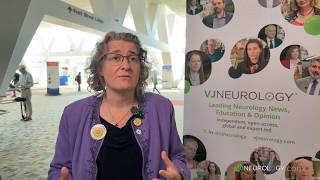
Joanna Wardlaw, CBE, MB ChB (Hons), MD, FRCR, FRCP, FMedSci, FRSE, The University of Edinburgh, Edinburgh, UK, discusses research showing that cerebral small vessel disease and lacunar stroke are linked to arterial widening rather than atherosclerotic narrowing. Prof. Wardlaw explains how these findings support the concept that small vessel disease is a distinct vascular disorder. This interview took place at the 12th European Stroke Organisation Conference (ESOC) in Maastricht, The Netherlands.
These works are owned by Magdalen Medical Publishing (MMP) and are protected by copyright laws and treaties around the world. All rights are reserved.
Transcript
This is a study that we undertook in a population of patients that we had recruited to our centre in Edinburgh. They had all had a mild stroke, which we expected would not be disabling, not a bad stroke, and half of them had had what we call a lacuna or small vessel stroke. And the other half had had a cortical or what we call large artery stroke, usually due to atherothromboembolism or cardioembolism...
This is a study that we undertook in a population of patients that we had recruited to our centre in Edinburgh. They had all had a mild stroke, which we expected would not be disabling, not a bad stroke, and half of them had had what we call a lacuna or small vessel stroke. And the other half had had a cortical or what we call large artery stroke, usually due to atherothromboembolism or cardioembolism. And we looked at the large artery appearances across this whole population. And we looked for evidence of atheromatous stenosis in any of the big blood vessels feeding the brain. And we also measured the width of the arteries and some specific measures of widening, which are described in the literature. So we had the widening on the one hand and the stenosis, which is atheromatous, on the other hand. And what we found was that there was a strong relationship between the atheromatous stenosis and the cortical stroke, but no relation with the lacunar stroke.
And secondly, we then looked at other brain features of small vessel disease, such as white matter hyperintensities, and also at the pattern of disease over a year. And we found that there was a strong relationship between the widening and the small vessel disease, but no relationship between the stenosis and the small vessel disease. And not only that, but the widening was related to worsening of the small vessel disease at the end of one year. So really what this does is it adds yet more weight to the fact that lacunar stroke and small vessel disease are not an atheromatous condition. Yes, people have atheroma, but then common things are common. And it really strengthens the message that this is a separate, intrinsic small vessel abnormality, which is associated with widening. And it adds even more weight to need to do trials looking at ways of trying to improve small vessel function because we already know that trying to treat the atheroma side of things doesn’t work very well. We have a European Stroke Organization guideline which essentially suggests that there is no benefit in giving antiplatelet drugs to people with white matter lesions, and there’s very limited benefit in lacunar strokes. So it kind of, the puzzle is now coming together, and so it really puts emphasis behind trials that are testing other drugs that might have benefits on the small vessels.
So in the UK, we are doing what’s called the Lacuna Intervention Trial 3, LACI-3. And that’s testing two existing drugs which are widely used for other cardiovascular diseases because we think they have effects which should help the function of the small blood vessels in the brain. So the other thing we saw with the large artery widening and narrowing was that the large artery widening was associated with less good function of the small vessels, whereas the stenosis was not related to the functioning of the vessels. So if we can see whether these drugs improve small vessel function, then that may help improve long-term outcomes. So LACI-3 is the third in a line of trials working up to this Phase III stage and we’re a year into recruitment and we hope to finish recruitment within another year or two and then we have to follow people up but our previous two trials were very promising so we are hoping that we will be able to confirm that benefit and then we’ll have another set of drugs which might be more beneficial for people with a lacuna stroke or other forms of small vessel disease.
This transcript is AI-generated. While we strive for accuracy, please verify this copy with the video.
Read more...